Warehouse Security Assessment Checklist for Ottawa Businesses
This warehouse security assessment checklist gives owners, facility managers, and operations teams a practical way to review how a distribution or industrial facility is actually protected — across perimeter, access control, CCTV, intrusion alarms, loading docks, and day-to-day operations. It is written for working warehouses in Ottawa and across Eastern Ontario, where high-value inventory, shift work, and constant truck traffic create security gaps that are easy to miss until something goes wrong. Use it as a self-audit before you bring in an integrator, or as a structured way to scope a formal review.
Family Security is a commercial and institutional security integrator serving Ottawa and Eastern Ontario, with field experience across warehouses, distribution centres, and industrial properties. The checklist below reflects the same categories our technicians work through during an on-site warehouse security assessment — and the common findings we see in real facilities.
Why a Warehouse Security Assessment Checklist Matters
Warehouses carry a different risk profile than offices or retail. The footprint is large, the perimeter is long, doors and docks open and close all day, and a single facility can hold more inventory value than the building itself is worth. Most warehouse losses are not dramatic break-ins — they are quiet failures: a propped fire exit, a camera pointed at a wall after a rack was moved, a former employee whose access card still works.
- Large perimeters and multiple entry points make coverage gaps easy to overlook.
- Shift work, contractors, and seasonal staff create constant access-control churn.
- Loading docks are the highest-traffic, highest-risk zone in most facilities.
- Inventory shrinkage often goes undetected until a cycle count, not in real time.
- Insurers and larger commercial clients increasingly ask for documented security measures.
Working through a structured checklist turns “the cameras look fine” into a documented picture of what is covered, what is not, and what to prioritize. It also gives you a defensible record for insurance, procurement, and internal planning.
Perimeter Security Checklist
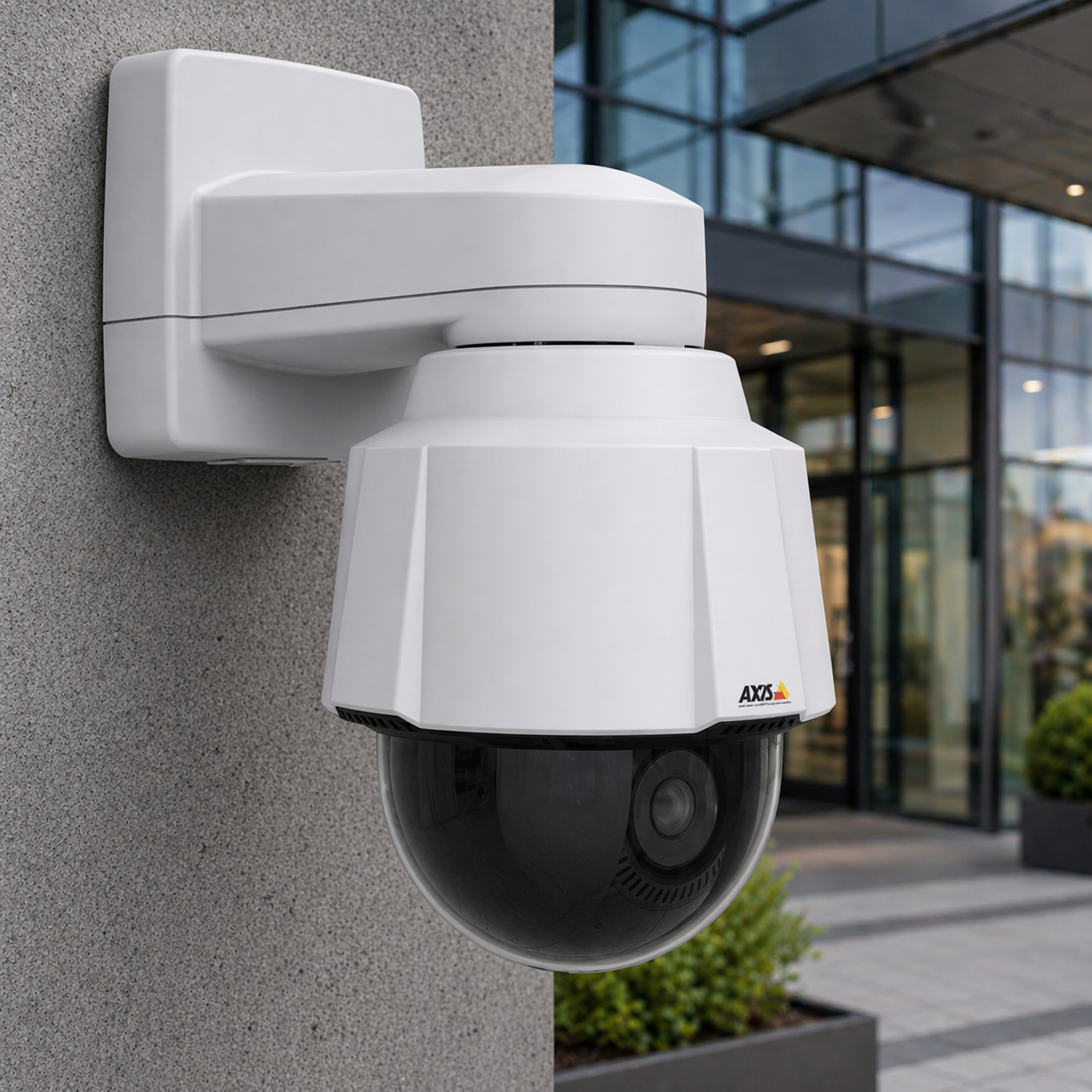
The perimeter is your first layer. The goal is to detect and document activity before anyone reaches a door or a dock.
- Fencing, gates, and yard barriers intact, with no gaps, damage, or unmonitored access points.
- Exterior lighting covers parking, yard, dock approaches, and the full building line — no dark zones.
- Gates and vehicle entries controlled, logged, and closed outside of receiving hours.
- Landscaping and stored materials kept clear of cameras, fences, and sightlines.
- Signage indicating monitored premises posted at approaches and entry points.
- Yard trailers, containers, and outdoor storage included in the surveillance plan.
Common vulnerability: a side or rear gate left open during the day “for convenience” becomes an unmonitored entry that bypasses every front-of-house control. In wide Eastern Ontario industrial lots, yard trailers parked outside camera coverage are a frequent blind spot.
Access Control Systems Checklist
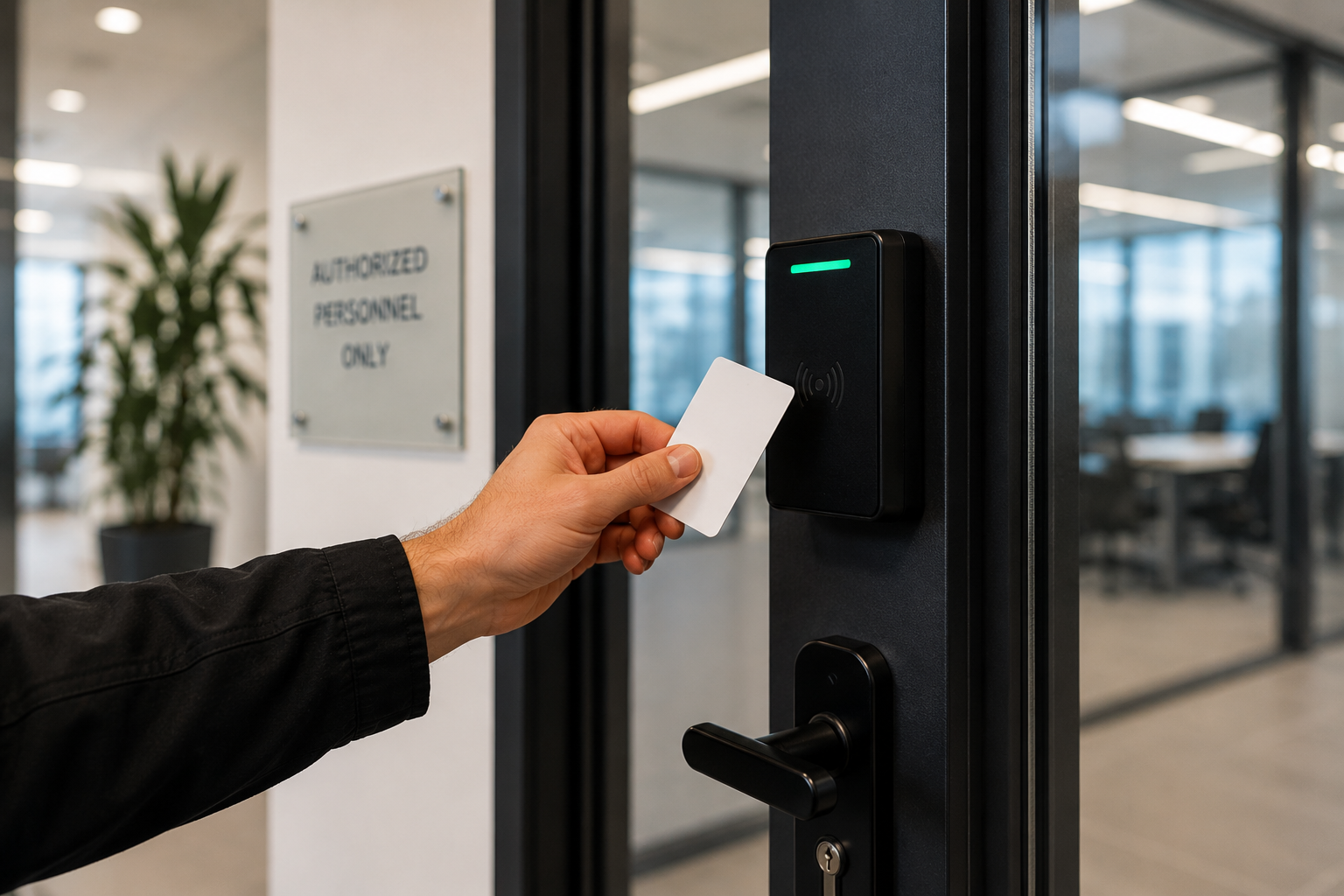
Keys do not scale in a warehouse. A commercial access control system tells you who entered, where, and when — and lets you revoke access instantly.
- All employee and personnel doors on credential-based access control, not shared keys or codes.
- Cardholder database current — terminated staff, expired contractors, and dormant cards removed.
- Access levels scoped by role and zone, so warehouse-floor staff cannot reach offices, server rooms, or high-value cages.
- Office, IT room, and inventory-cage doors held to a higher access tier than the general floor.
- Door hardware healthy: closers, strikes, request-to-exit devices, and door-held-open alerts working.
- Access events logged and retained, and reconcilable against camera footage when needed.
Common vulnerability: in facilities with high turnover, the cardholder list drifts. It is routine to find 10–20% of active credentials belonging to people who no longer work in the building. A high-value-inventory cage protected only by a key everyone can borrow is the second-most-common finding.
CCTV Camera Coverage Checklist
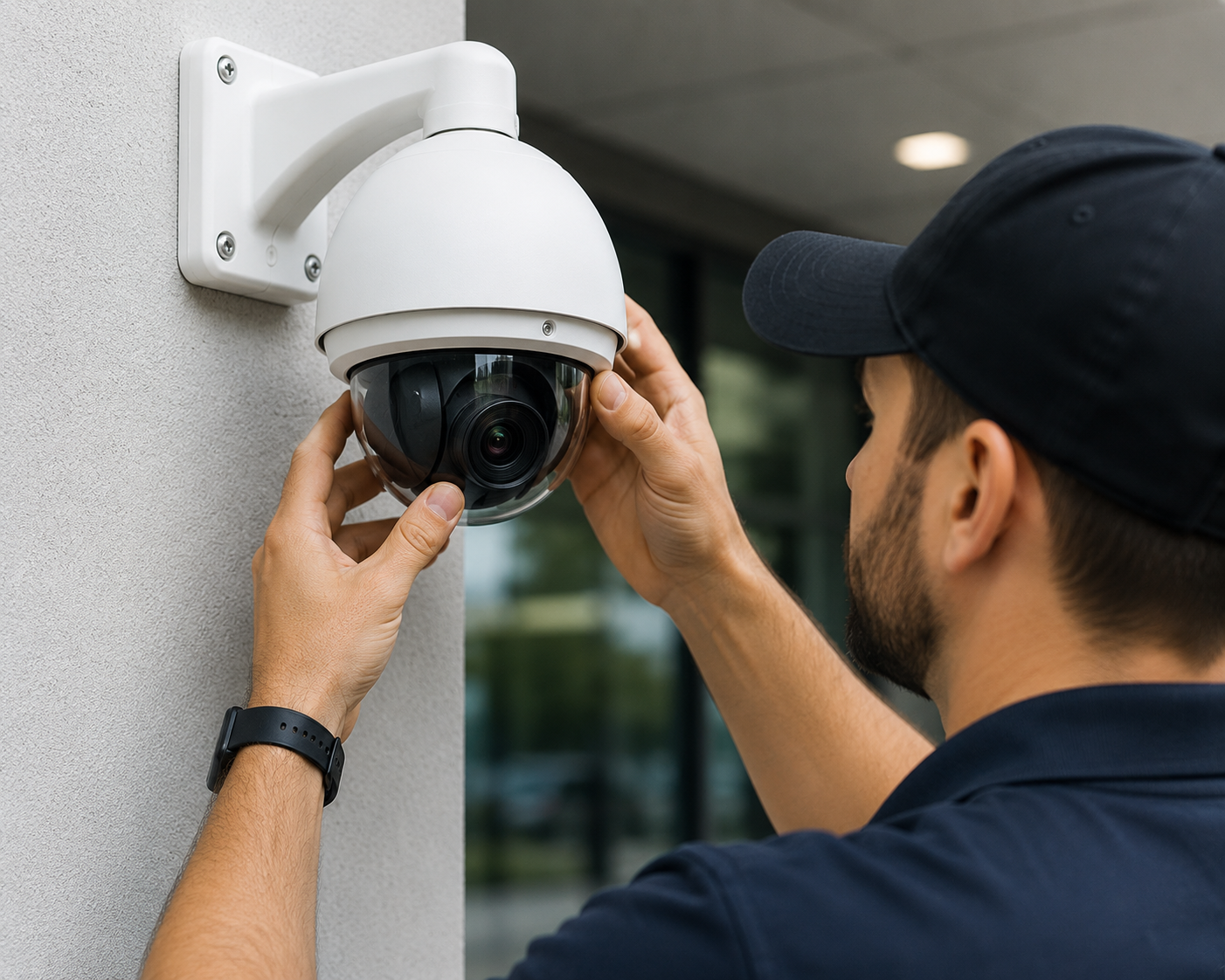
Cameras are only useful if they cover the right zones, record reliably, and produce usable images. A well-designed security camera system follows the flow of people and goods through the facility.
- Coverage at every entry, dock door, shipping/receiving area, and high-value storage zone.
- Interior coverage of main aisles, staging areas, and cash/returns desks — no critical blind spots.
- Recorder health verified: every camera streaming and writing, retention meeting your defensible window.
- Image quality usable for identification — focus, lighting, and frame rate adequate at the points that matter.
- Camera positions re-checked after racking, layout, or workflow changes.
- NDAA Section 889 reviewed for facilities with government, federal-adjacent, or regulated clients — see NDAA-compliant security systems.
Common vulnerability: racking-aisle blind spots. A camera plan laid out before the racks were installed leaves long aisles uncovered. The other frequent finding is a recorder quietly out of storage, overwriting footage faster than the retention policy assumes — discovered only when someone goes looking for an incident that is already gone.
Intrusion Alarm Systems Checklist
An intrusion alarm covers the hours when the building is empty and extends protection to zones cameras cannot watch continuously. The system has to match how the warehouse actually operates.
- Door, motion, and glass-break protection on all perimeter doors, docks, and vulnerable openings.
- Arming schedule aligned with real operating hours, including overnight, weekend, and seasonal shifts.
- Zoning that lets the warehouse arm independently of offices and after-hours work areas.
- Monitored communication path with supervised connectivity and cellular failover.
- Current key-holder and response-call list on file with the monitoring station.
- Alarm history reviewed — chronic false alarms and bypassed zones investigated, not left disarmed.
Common vulnerability: a dock or overhead door that false-alarms gets bypassed “temporarily,” and the bypass becomes permanent — leaving the highest-risk opening unprotected while the contract still bills for monitoring it.
Loading Dock Security Checklist
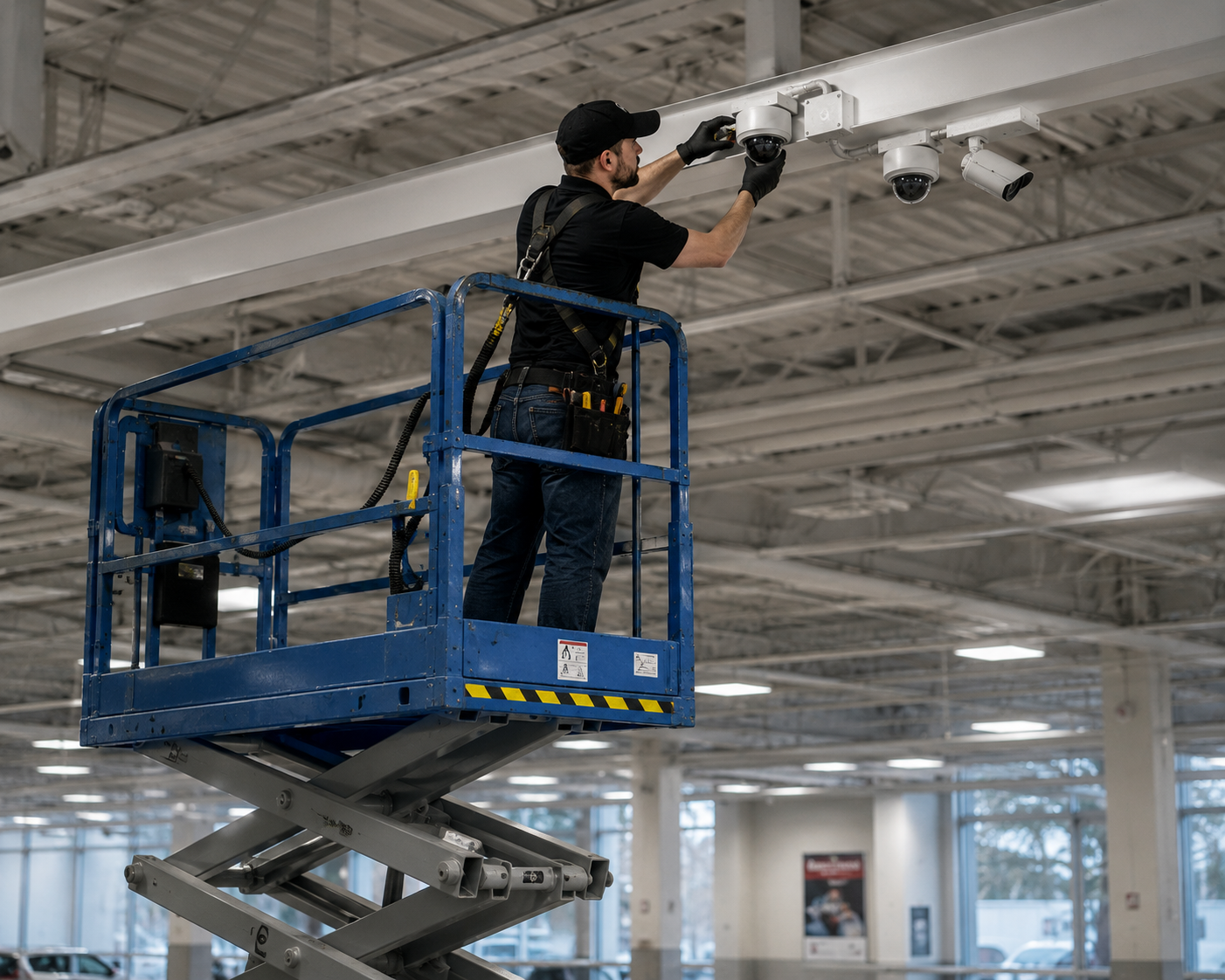
The loading dock is where security, operations, and inventory loss most often intersect. It is busy, it is the easiest place to move goods in and out, and it is frequently the weakest documented zone.
- Dock doors closed and secured when not in active use — not left open across an entire shift.
- Overhead and personnel dock doors on the access and alarm system, with held-open alerting.
- Dedicated camera coverage of each dock door, the staging area, and the trailer approach.
- Driver and carrier check-in process controlling who enters the dock and the building.
- Shipping/receiving paperwork and system records reconcilable against camera footage.
- Yard and trailer staging areas covered and lit, including drop trailers left overnight.
Common vulnerability: dock doors propped open for airflow or convenience during a shift create an uncontrolled, unmonitored opening straight into the inventory floor. Pair that with a staging area outside camera coverage and a loss can occur with no usable record of it.
Employee Security Practices Checklist
Technology only holds if the people using it follow consistent practices. Most warehouse security failures trace back to routine habits, not sophisticated attacks.
- Documented onboarding and offboarding process that issues and revokes access promptly.
- No credential sharing, tailgating, or door-propping tolerated as normal practice.
- Visitor, contractor, and driver sign-in process with escort rules for restricted zones.
- Key and credential inventory tracked, with lost cards deactivated immediately.
- Staff briefed on what to do for suspicious activity, after-hours access, and alarm events.
- Clear ownership of the security system — someone responsible for reviews, user changes, and incident follow-up.
Common vulnerability: offboarding lags. An employee leaves on Friday and their card still works the following week. Tailgating through a single controlled door during shift change quietly defeats the access system for everyone who follows.
Cybersecurity and Security System Protection
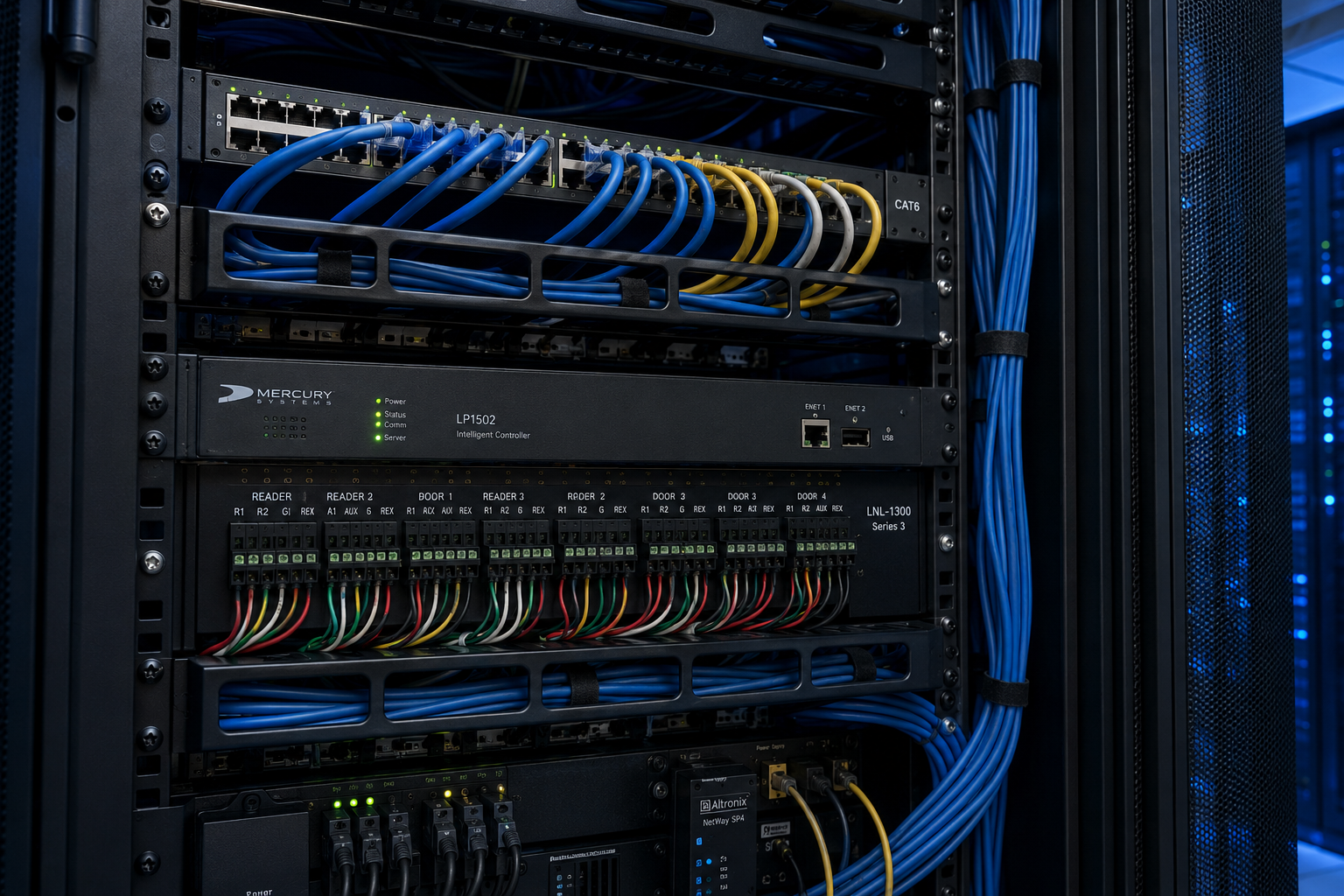
Modern cameras, recorders, and access controllers are network devices. If they are left on default settings, the security system itself becomes the way in.
- Default passwords changed on every camera, recorder, panel, and controller.
- Firmware kept within the manufacturer-supported window, with known vulnerabilities patched — lifecycle patching is operational security, as outlined in NIST SP 800-40 Rev. 4 patch management guidance.
- Security devices segmented from the corporate and warehouse-management network (VLAN separation).
- Remote-access paths to recorders and head-end systems secured with strong credentials and MFA.
- Vendor and integrator back-door accounts identified and controlled.
- Backups of recorder configuration and access-control databases maintained.
Common vulnerability: a recorder reachable from the internet on its default login. It exposes live footage, the device, and often a path onto the broader network — a single weak point that undermines the entire physical-security investment.
Maintenance and Lifecycle Planning
A warehouse security system runs in a harsh environment — dust, temperature swings, vibration, and constant door cycles. Without maintenance, coverage degrades quietly. Ongoing security system maintenance keeps the posture you paid for intact.
- Scheduled preventive maintenance for cameras, recorders, panels, readers, and door hardware.
- Regular verification that every camera is online, recording, and producing usable images.
- Recorder storage and retention checked against your documented policy.
- Door hardware, strikes, and closers inspected for wear on high-cycle doors.
- End-of-life equipment identified and budgeted before it fails, not after.
- Spare-parts and response-time expectations matched to how critical each device is.
Common vulnerability: “set and forget.” A system commissioned three years ago with no maintenance plan typically has several offline cameras, drifted focus, and firmware well outside the supported window — none of it noticed until footage is needed and isn’t there.
Warehouse Security Assessment Summary
Worked through end to end, this checklist gives you a clear view of warehouse security across eight categories — perimeter, access control, CCTV, intrusion alarms, loading docks, employee practices, cybersecurity, and maintenance. The pattern in most facilities is the same: the equipment is largely in place, but coverage has drifted away from how the building is actually used.
- Perimeter and yard fully covered and lit, with no convenient unmonitored entries.
- Access control current, role-scoped, and reconciled against the people actually in the building.
- Cameras covering real traffic flow, recording reliably, with retention you can defend.
- Alarms zoned to operations, monitored, and free of permanent bypasses.
- Loading docks treated as the highest-risk zone and secured accordingly.
- People, process, cyber posture, and maintenance owned by someone accountable.
If several items above are uncertain or “we think so,” that is the signal to move from a self-audit to a documented review. A professional assessment ties these categories together into a prioritized plan — and connects to the commercial security systems work needed to close the gaps.
Request a Warehouse Security Assessment
Family Security performs on-site warehouse and industrial security assessments across Ottawa and Eastern Ontario. We work through the same categories in this checklist on your actual facility, document what we find, and deliver a prioritized plan — covering access control, CCTV, alarms, perimeter, and loading-dock security. This is the same structured SiteScope assessment process we run for facilities across Ottawa and Eastern Ontario. The result is a defensible picture of your current posture, not a sales quote for equipment you may not need.