Access Control Upgrade Assessment Checklist for Ottawa & Eastern Ontario
An access control upgrade assessment is not a buyer’s guide to new access control. It is the discipline of evaluating a deployed system already in service and producing a documented upgrade path — panel by panel, door by door, credential by credential. Most commercial buildings in Ottawa and Eastern Ontario do not need a green-field design. They need an honest review of what is installed and which doors, panels, readers, credentials, and integrations have to move first.
This checklist reflects what Family Security looks at during a commercial access control upgrade assessment. We work with facilities directors on Kantech panel migrations in federal-adjacent office buildings along the Sussex corridor, with property managers replacing legacy Lenel head-ends in downtown towers off Albert and Slater, and with procurement officers in Centretown and Westboro multi-tenant buildings consolidating cardholder databases. Audiences: facilities directors, IT-security teams, property managers, procurement officers, and federal-supply-chain compliance owners. Use cases: pre-procurement gap analysis, NDAA migration prep, end-of-life scoping, and insurance-carrier remediation.
Why an Access Control Upgrade Assessment Is Different from a New AC Project
A new commercial access control project starts from a blueprint and a clean credential strategy. An upgrade assessment starts from a deployed system that already has cardholders, audit history, integrations, and operational habits attached. Cut-over risk, credential continuity, and audit-trail preservation become first-order constraints — not afterthoughts.
- Live cardholders, access groups, schedules, and historical audit data must survive the cut-over window.
- Panels, readers, credentials, and head-end software rarely age at the same rate, so the upgrade path is almost always phased.
- Compliance has shifted under the deployed system — NDAA Section 889, OSDP, and credential-format deprecation now apply to equipment specified before those rules existed.
The assessment surfaces the gap between what is installed and what the next ten years require, and converts that gap into a sequenced upgrade plan.
How We Assess a Commercial Access Control Upgrade Posture
The walkthrough runs from the inside out — head-end and panels first, then credentials and readers, then doors, network, NDAA lineage, integrations, and cut-over sequencing. Panel firmware lineage and credential format drive nearly every downstream decision about what stays and what moves first.
1. Legacy Panel Inventory & Communication Path
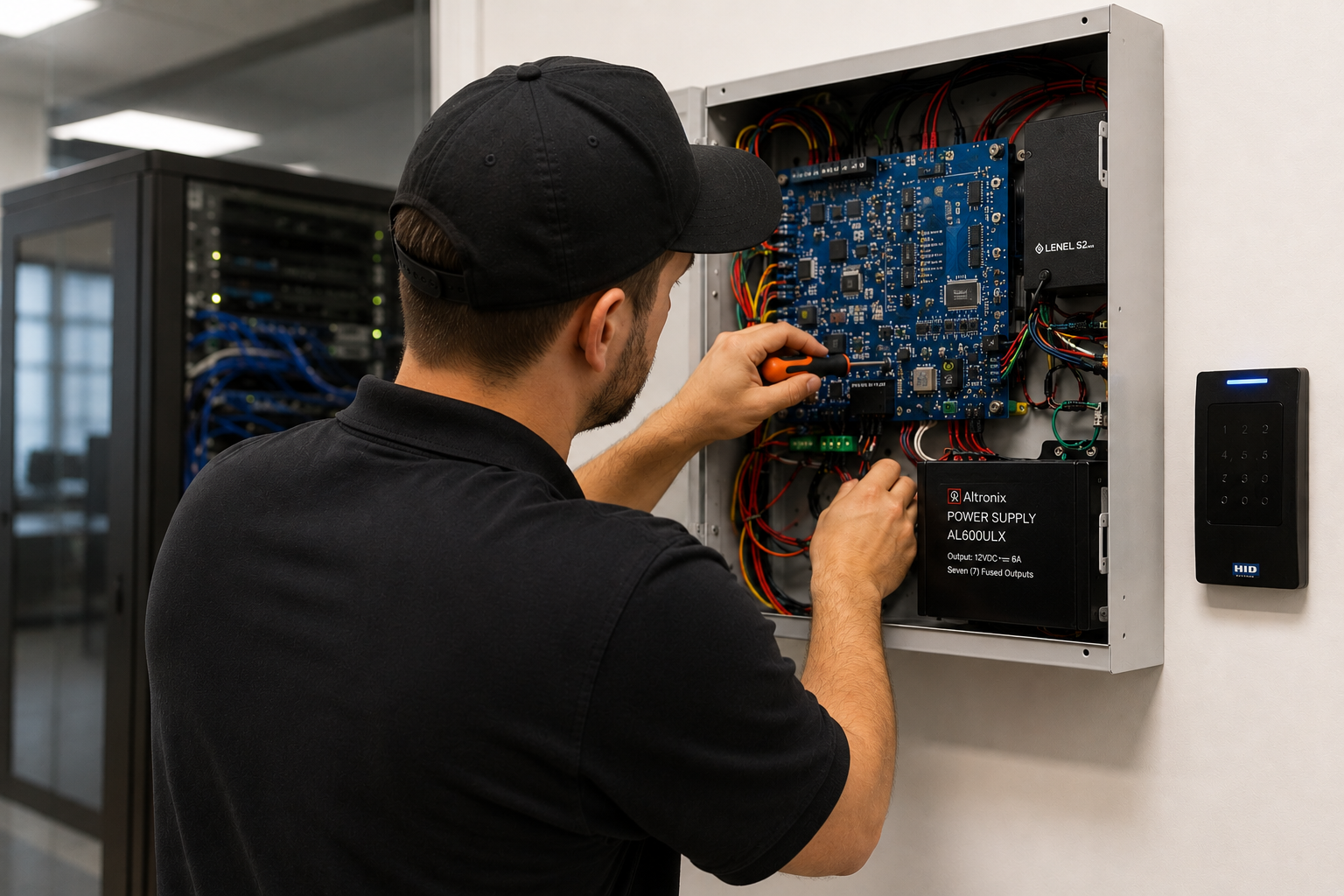
- Inventory every panel by manufacturer, model, firmware, and install date — Kantech KT-300/KT-400, Lenel LNL-2220/3300, DSC PowerSeries Neo, OSDP controllers — and note which are still under vendor support.
- Trace the upstream communication path: RS-485, dedicated copper home-run, flat-LAN IP, or segmented-VLAN IP.
- Record battery age, tamper status, and PoE / 12VDC power source — replacement-window batteries are an underestimated cut-over risk.
- Map which panels host which doors, readers, and I/O so the phased plan sequences by panel, not by door alone.
A common finding: three panel generations from two manufacturers, with the oldest panel handling the busiest entry door and no spare on the shelf — the lead indicator for phase one.
2. Credential Format Compatibility & Migration Plan
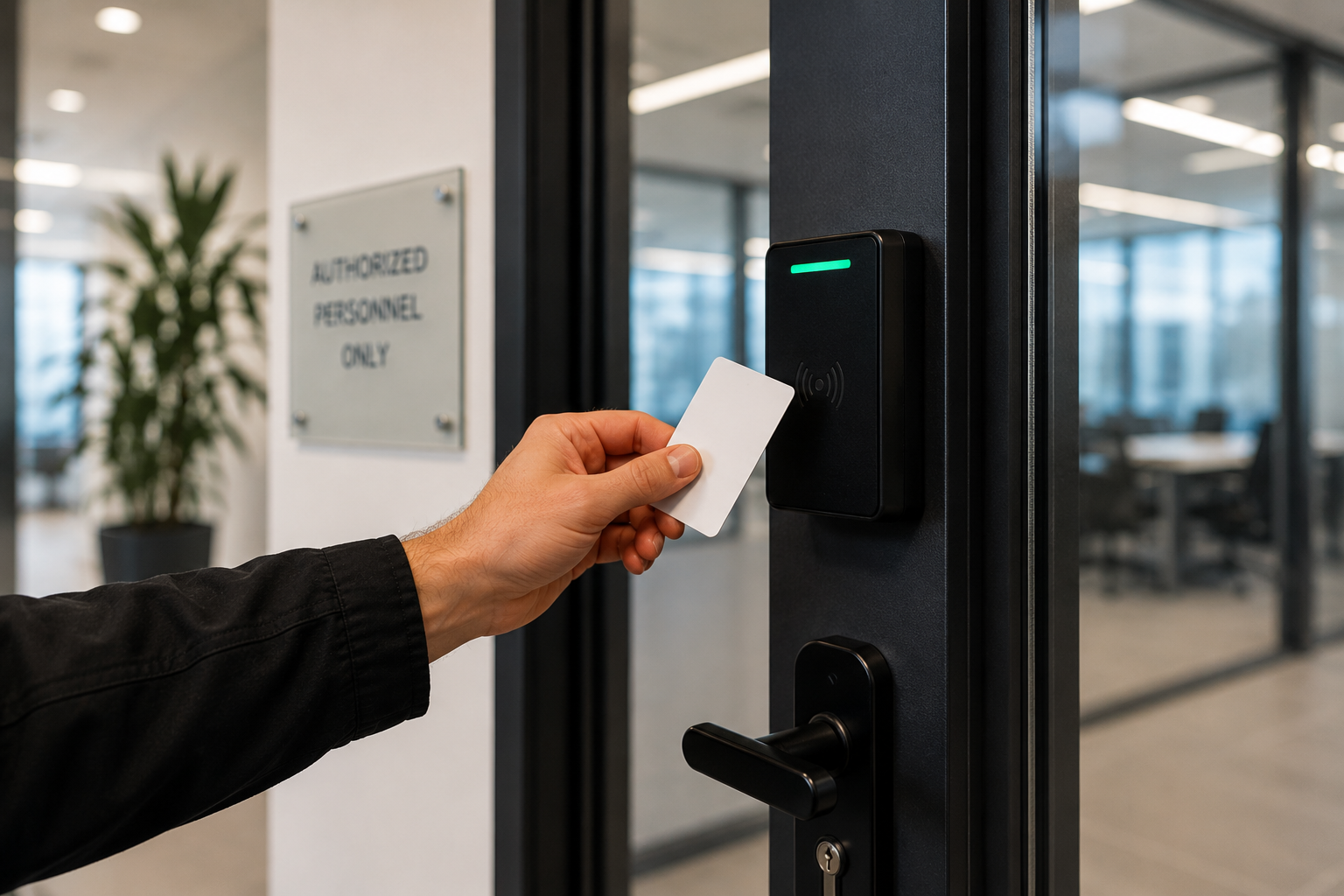
- Identify deployed credential formats — 125 kHz HID Prox, iCLASS legacy, iCLASS SE, Seos, MIFARE Classic, DESFire EV2/EV3, and any mobile credentials.
- Pull a cardholder export and reconcile against HR or tenant records — stale cards, terminated employees, and duplicate records are routine after five years.
- Confirm whether the issuing key is recoverable, escrowed, or lost — a lost site key forces a full re-credentialing event.
- Plan a dual-technology transition window: multiCLASS-style readers that read both legacy and target formats let cardholders migrate over weeks, not one weekend.
- Decide whether mobile credentials enter phase one, phase two, or out of scope — federal-adjacent tenants may defer mobile adoption.
The credential strategy, not the panel, often gates the entire upgrade — 125 kHz HID Prox still issued in 2026 is a clone-vulnerable format operationally deprecated for nearly a decade.
3. Reader Hardware & Form Factor Transition (HID multiCLASS / SE / OSDP)
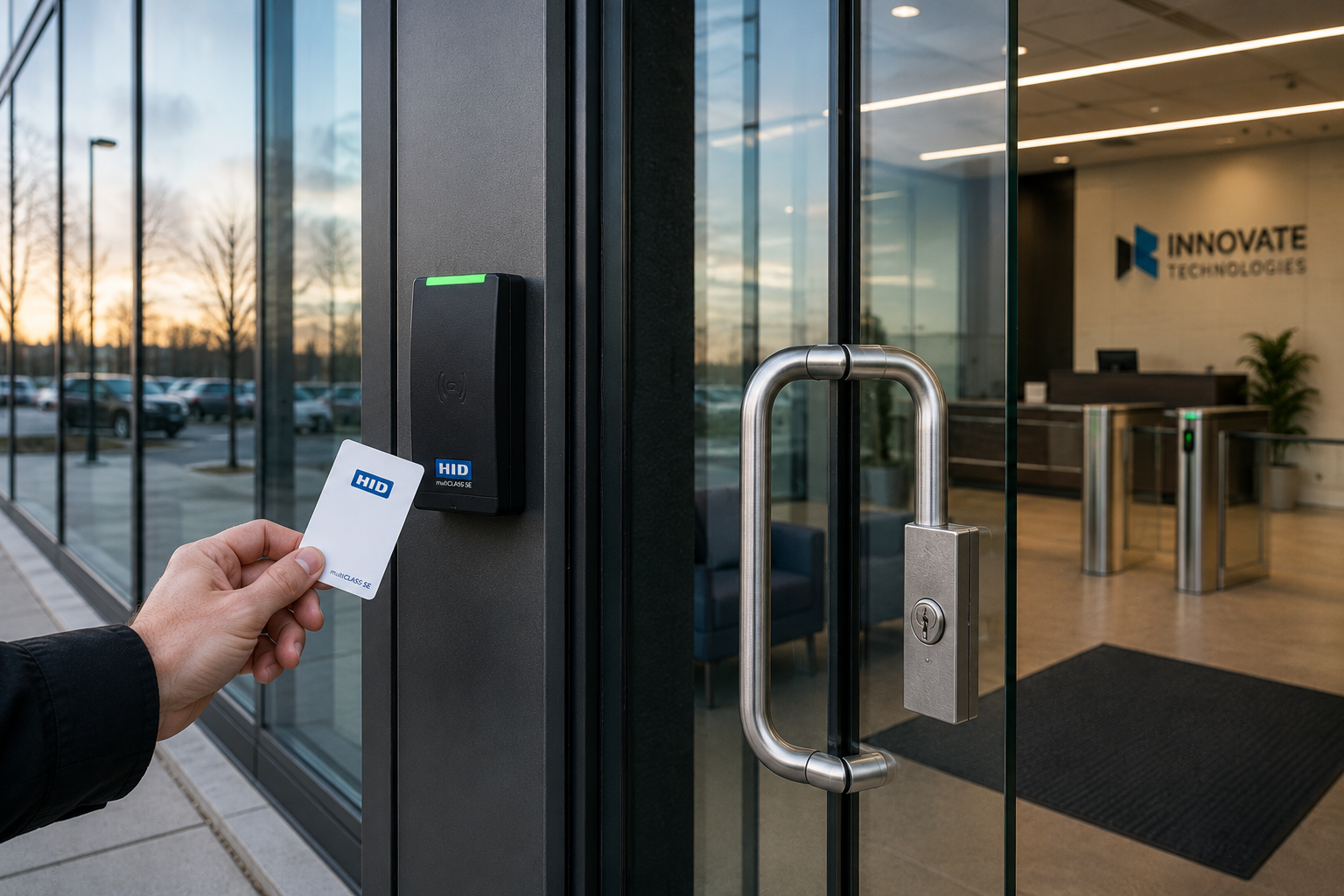
- Inventory existing reader models and confirm Wiegand vs OSDP support — OSDP Secure Channel is the baseline for upgraded reader-to-panel communication.
- Audit reader form factors against door type — mullion for frameless glass, wall-plate for hollow-metal, weather-rated for exterior and garage approaches.
- Verify reader power, wiring distance, and EOL-resistor configuration so wire-pull avoidance is honestly scoped, not assumed.
- Flag any reader running Wiegand-only against current best practice on both our Kantech access control and Lenel access control upgrade paths.
The reader layer is where occupants notice the upgrade; the assessment plans for it.
4. Door Hardware, REX, Position Switches & Strike Aging
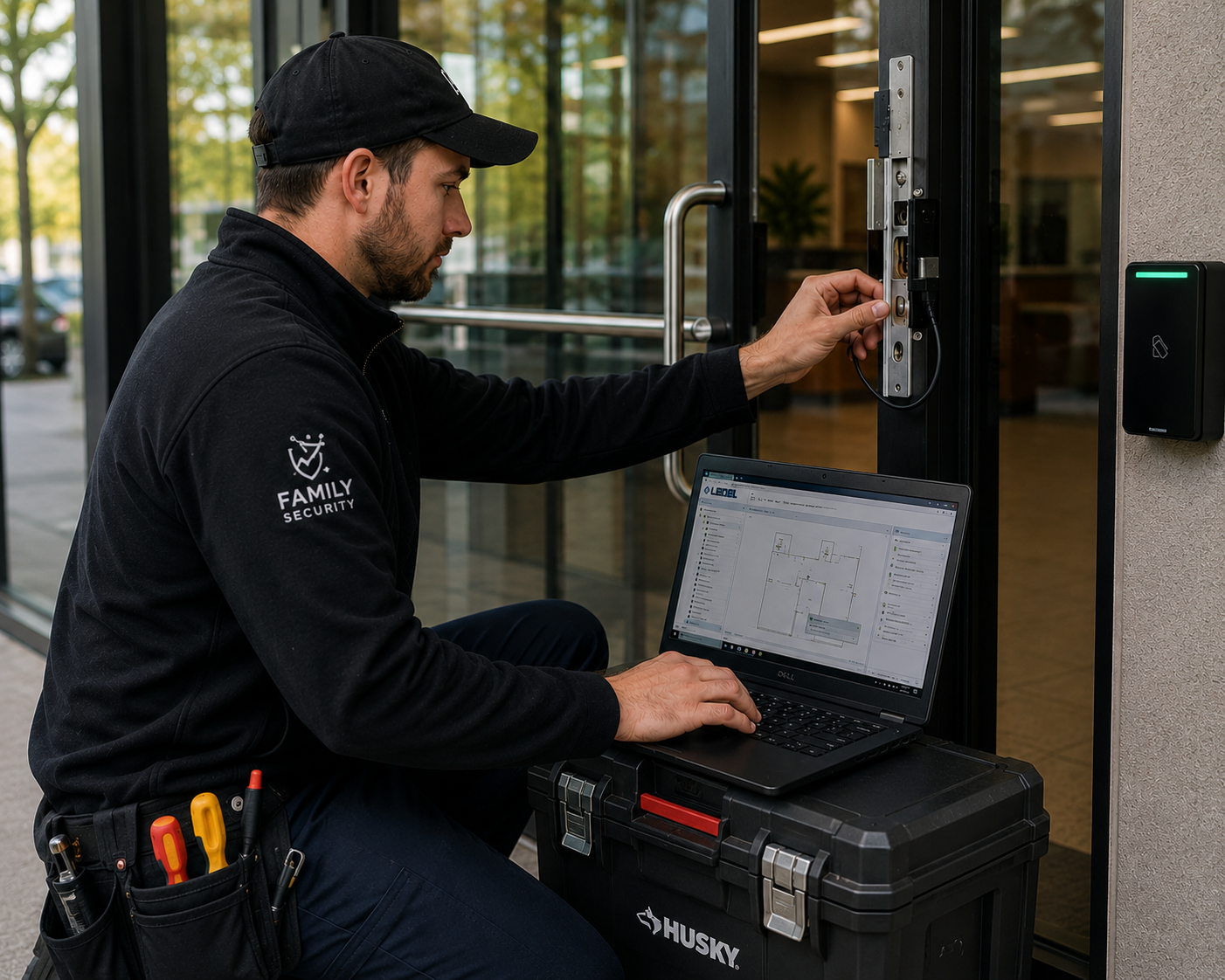
- Walk every controlled door and verify strike or maglock condition, free-egress hardware, and frame alignment — strikes worn against the keeper are a silent DPS failure mode.
- Test request-to-exit devices on each door — PIR REX drift, broken REX push buttons, and REX wired to bypass rather than shunt are routine findings.
- Verify door position switches actually supervise the door — misaligned contacts generate false propped-open alarms and condition operators to ignore the audit log.
- Inspect fire-life-safety override wiring and failsafe vs failsecure assumptions before any strike replacement.
The door, not the panel, is where upgrades usually slip schedule — frame conditions surface only during the physical walk.
5. Networking, IP Transition & Cyber Posture
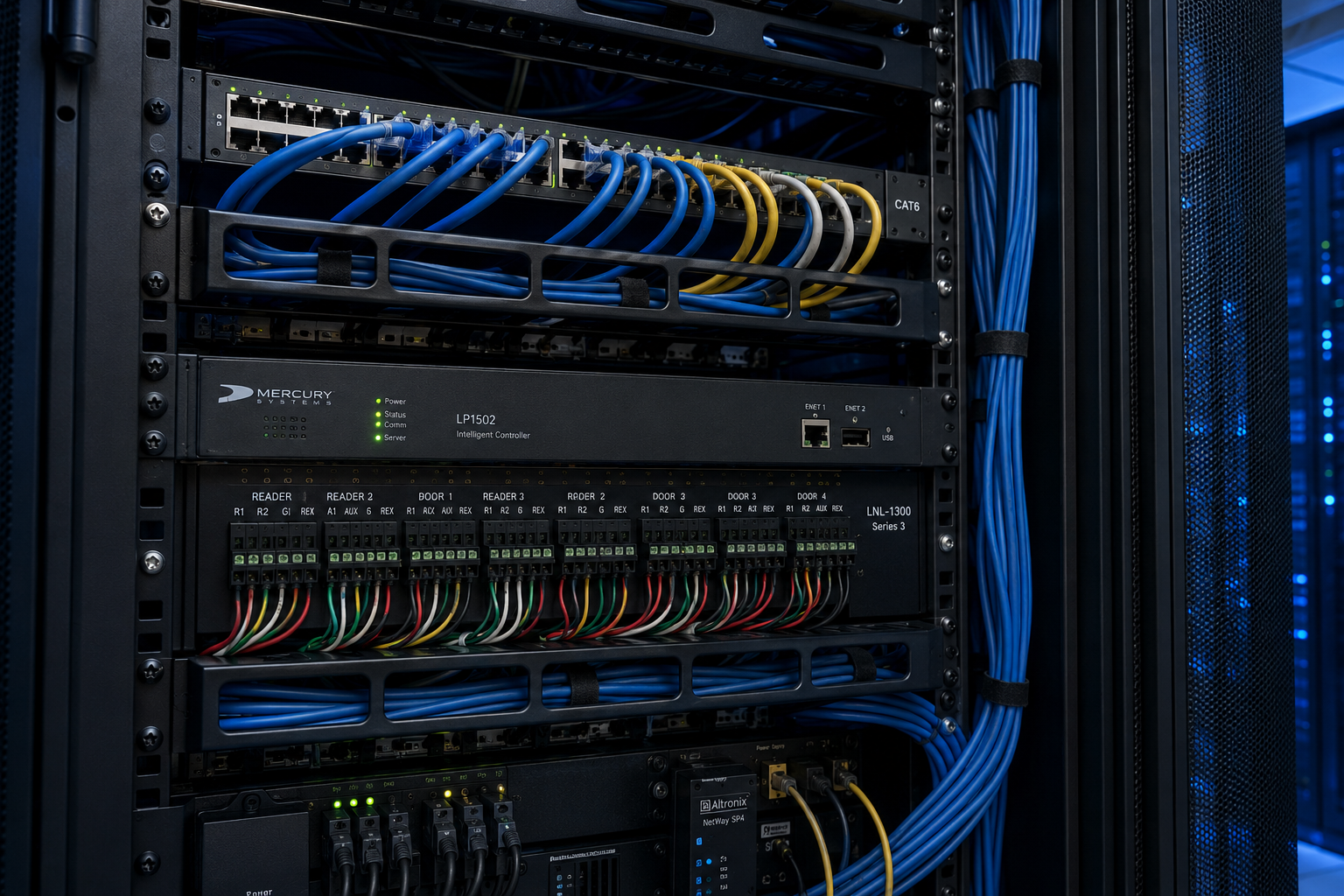
- Map every panel, head-end server, workstation, and reader subsystem to its VLAN — flat-LAN access control is a finding, not a baseline, in 2026 commercial deployments.
- Confirm head-end patch cadence, OS support window, database backup posture, and admin-account hygiene — shared administrator credentials across IT and the integrator is a routine observation.
- Validate that panel-to-head-end communication uses an encrypted channel where the platform supports it, and document the gap where it does not.
- Review remote-access pathways and confirm multi-factor authentication on external admin access, aligned with federal guidance such as the Canadian Centre for Cyber Security ITSP.30.031 V3 user-authentication guidance.
The network layer is where access control stops being a building-systems concern and becomes an IT-security concern. We routinely cross-reference findings here with the building’s security system integration posture so cut-over sequencing covers both surfaces.
6. NDAA Section 889 & Equipment Lineage Review
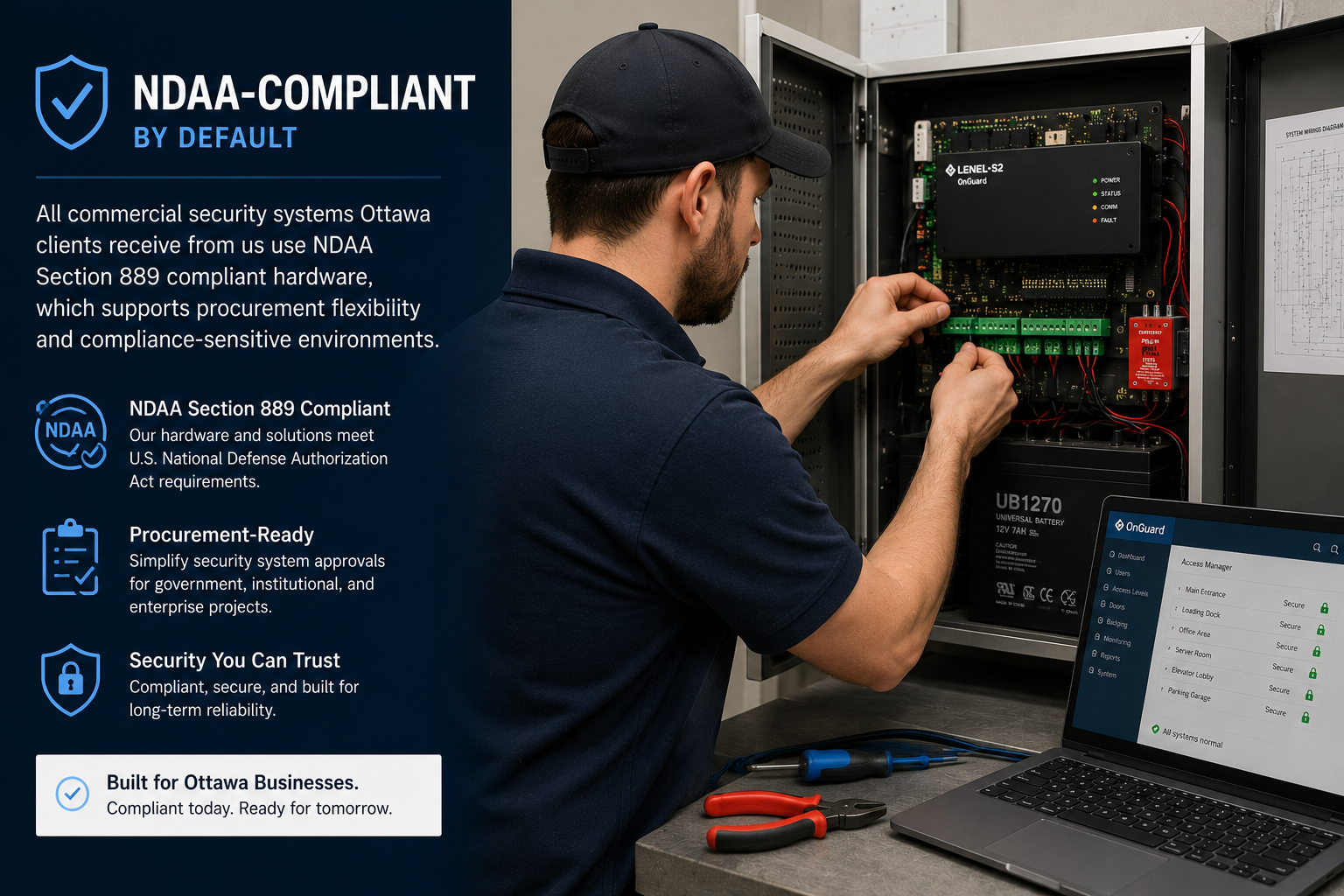
- Pull the equipment list — panels, readers, OEM controllers, video door stations — and compare against the NDAA Section 889 covered-entity prohibition.
- Document OEM lineage where a brand has been white-labelled by a covered manufacturer — equipment-lineage compliance is paperwork as well as hardware.
- Identify tenant procurement constraints or insurance-carrier requirements that elevate NDAA from best-practice to blocking on the upgrade specification.
- Sequence replacement of prohibited equipment into phase one regardless of remaining lifespan — for federal-tenant buildings this cross-links into our NDAA-compliant security systems scoping work.
NDAA compliance shifts an upgrade from lifecycle-driven to procurement-driven — the timeline now serves supply-chain, not hardware EOL.
7. Integration with Existing CCTV, Alarm & Building Systems
- Document existing integrations — access events to CCTV (camera call-up, bookmark on alarm, forced-door verification), intrusion partition arm/disarm, elevator dispatch, visitor management, HR provisioning.
- Identify integrations that depend on the legacy panel or head-end API and will not survive the migration without rework — these are the silent cost drivers.
- Confirm whether SDK or API access is available on the target head-end and which integrations require manufacturer professional services to rebuild.
- Walk the equivalent commercial CCTV assessment checklist on cameras that pair with the access doors, so the upgrade preserves the CCTV-to-AC handoff.
Integration debt is where an upgrade quote understates scope; the assessment makes it visible before procurement.
8. Phased Cut-Over, Tenant Communication & Audit Trail Continuity
- Sequence the cut-over by panel and door cluster — never by single door — so each phase produces a verifiable functional state at end of shift.
- Plan dual-credential issuance windows so cardholders are not stranded between legacy and target systems during reader changeover.
- Preserve historical audit-trail data through export, archive, or read-only access — chain of custody on cardholder events matters for HR, insurance, and any forensic event after the cut-over.
- Communicate the cut-over schedule to tenants, after-hours staff, cleaning crews, and emergency contacts — operational surprise is the leading cause of avoidable upgrade-day calls.
- Confirm rollback posture for each phase — credential re-issuance, firmware revert path, interim Wiegand fallback — so phase-level go/no-go decisions are defensible.
Cut-over discipline separates a clean migration from a multi-week support fire — the upgrade plan stands or falls on this phase, not on the equipment spec.
Common Findings in Ottawa Access Control Upgrade Reviews
Patterns repeat across federal-adjacent offices, downtown towers, warehouse facilities, and multi-tenant properties across commercial Ottawa. The findings below recur often enough that they are planning assumptions, not edge cases.
- End-of-life panels still in service past vendor support cutoff, with no spare on the shelf and no firmware path forward.
- 125 kHz HID Prox credentials still issued to new hires despite documented clone vulnerability.
- Reader-to-panel communication running clear-text Wiegand instead of OSDP Secure Channel.
- Cardholder database holding terminated employees and duplicate records — a common gap in our Ottawa access control reviews.
- Door position switches misaligned to the point that propped-door alarms are routinely ignored.
- NDAA-flagged equipment still active in buildings courting federal tenants, with no remediation timeline.
- Flat-LAN access control sharing a subnet with general office traffic, with no VLAN segmentation.
- Integration tie-ins between access and CCTV, alarm, or elevator dispatch that were never documented.
- Administrator credentials shared across integrator, IT, and facilities with no multi-factor enforcement.
The shared root cause is drift: the original design was sound at commissioning, but ten years of tenant change, vendor turnover, and credential issuance accumulated without anyone owning the lifecycle review.
When to Schedule an Access Control Upgrade Assessment
The triggers below are practical, not theoretical — these are the moments when a documented upgrade plan stops being optional.
- The existing head-end or panel firmware has reached vendor end-of-support or end-of-life.
- The building is courting a federal or federal-adjacent tenant whose lease conditions include NDAA Section 889 supply-chain compliance.
- Credentials are being lost, cloned, or routinely re-issued at a rate that indicates a format-deprecation problem rather than user behavior.
- The cardholder database has grown faster than HR offboarding can keep up.
- An insurance carrier or corporate-security audit has flagged remediation with a binding deadline.
- Capital planning is mid-cycle and the security line needs a defensible scope rather than a vendor quote.
- A merger, acquisition, or tenant turnover is forcing the head-end to absorb cardholders from a foreign system.
- A planned security system maintenance program has flagged systemic upgrade needs that exceed routine service scope.
- A sibling vertical assessment — warehouse security assessment, office security assessment, or property management security review — has surfaced the AC subsystem as the dominant lifecycle constraint.
The output is a documented findings register, a prioritized remediation list, and a phased upgrade path with cut-over sequencing and credential transition — the artifact procurement, IT-security, and finance need to decide defensibly.
Next Step
Family Security is a commercial security integrator working across Ottawa and Eastern Ontario. We assess access control systems we did not install — Kantech, Lenel, DSC PowerSeries Neo, OSDP controllers, and mixed-vendor legacy environments — and document the upgrade path before recommending a single piece of equipment.
A SiteScope access control upgrade assessment ends with a structured Technician Review Note, not a quote. The note documents panel inventory, credential format, reader transition, NDAA lineage, integration debt, and a phased cut-over plan procurement, IT-security, and facilities can sign off on together.
Need a broader operational review before planning upgrades? Start with a Commercial Access Control Assessment.