Commercial CCTV Assessment Guide for Ottawa & Eastern Ontario
A commercial CCTV assessment is not a buyer’s guide to new cameras. It is the discipline of evaluating a CCTV system already in operation — measuring whether coverage, retention, equipment lineage, and recorder cyber posture meet the demands the building places on them. Most commercial sites in Ottawa and Eastern Ontario have inherited their video estate across multiple installs, ownership changes, and vendor handoffs. The result is rarely a system that fails outright; it is a system that drifts — coverage gaps at the loading dock, retention quietly shrinking below the defensible window, NDAA non-compliant gear on a federal-adjacent floor, and the recorder on the same VLAN as the office printer.
This guide reflects what Family Security looks at during a commercial CCTV assessment across Ottawa and Eastern Ontario. Typical engagements include distribution and light-industrial CCTV in the Walkley Road industrial corridor, multi-tenant CCTV across downtown towers and Centretown mixed-use buildings, and retail CCTV along the Bank Street corridor through the Glebe, Westboro, and Hintonburg. We work with operations leads, facilities directors, IT-security teams, loss-prevention managers, and property managers — generally procuring a CCTV upgrade, scoping a coverage audit, preparing an NDAA migration plan, or responding to an insurance carrier requirement. The discipline is the same in each case: walk the operating system systematically before recommending changes.
Why a CCTV Assessment Is Different from a CCTV Quote
A CCTV quote answers a procurement question: how much to install a defined camera count at a defined site. A CCTV assessment answers a posture question: does the video estate you already operate produce evidence that holds up when the building actually needs it. Quoting starts from a wish list; assessment starts from deployed reality.
- Commercial CCTV is evaluated against incidents that have not happened yet — the assessment forecasts whether the system will be usable when one does.
- Coverage drift is invisible until tested; most operators discover blind spots during an incident review, not normal operation.
- Retention, NDAA lineage, and recorder hardening rarely show up on the live monitor wall, but always show up on an audit.
A commercial CCTV assessment treats the existing system as the primary object of analysis — the output is documented findings against a defensible baseline, not a redesign proposal.
How We Assess a Commercial CCTV Posture
The order below moves from coverage outward — physical layout, image quality, storage and retention, equipment lineage and cyber posture, then specialty surfaces. Each subsection is a checklist for the discipline, not a sales matrix.
1. Coverage Planning & Camera Counts by Zone
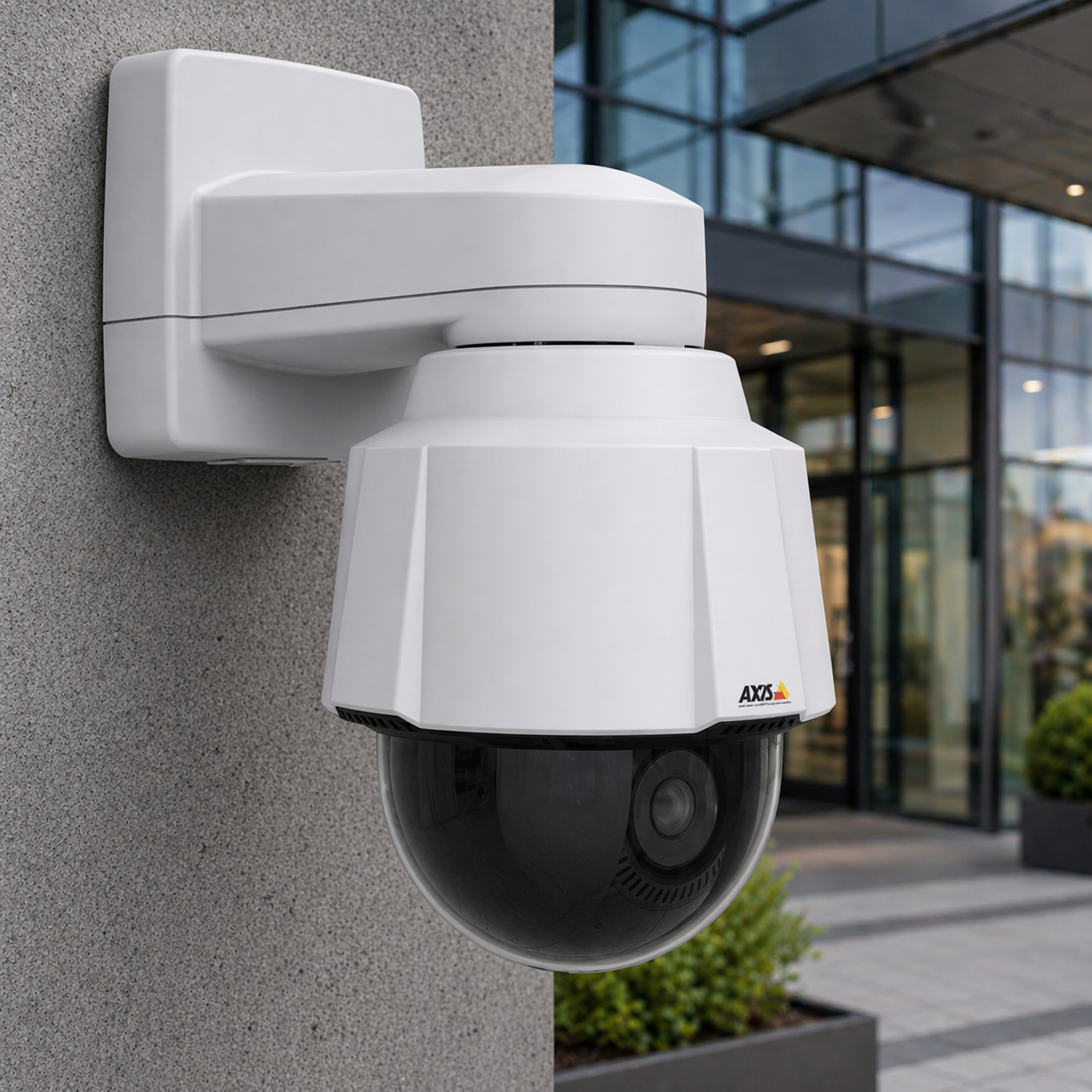
- Map every camera to a named zone (entry, perimeter, loading dock, lobby, server room, sales floor, parking) and confirm each zone has an assigned purpose: detection, identification, or both.
- Walk the site against the deployed layout and flag any zone that lacks a camera, has only a single oblique angle, or relies on a PTZ at preset.
- Confirm overlap at choke points (single doorways, dock doors, elevator vestibules) so loss of one camera does not blind an entire transit path.
- Document field-of-view obstructions: shelving, signage, foliage, vehicle patterns, and tenant build-outs that have appeared since the original install.
A common finding: the camera count matches the as-built, but two or three zones are functionally uncovered because the original placement assumed a layout the tenant has since changed.
2. Resolution, Frame Rate & Identification-Grade Imagery
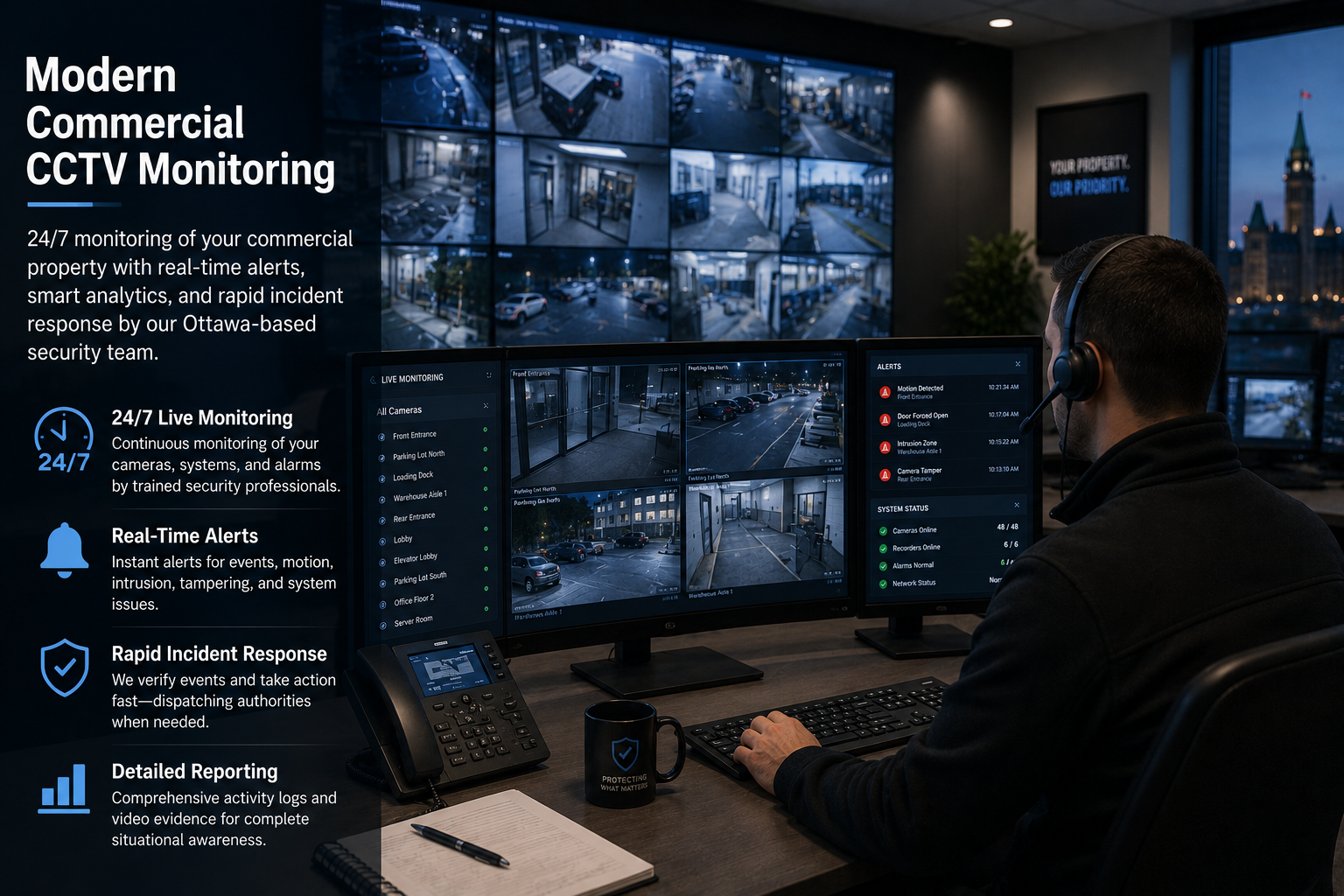
- Distinguish detection-grade from identification-grade in every camera’s design intent — a camera proving “a person was here” is not the same as one producing a face usable by an investigator.
- Test pixel-on-target at the actual subject distance using a known face or plate; manufacturer datasheets routinely overstate usable identification distance.
- Verify frame rate against the activity recorded — 7-10 fps is defensible in a quiet warehouse security assessment checklist, not at a cash counter or dock receiving point.
- Confirm codec (H.264 vs H.265) and bitrate ceiling are aligned with retention targets — over-aggressive compression destroys identification-grade evidence quietly.
A common pattern in Ottawa CCTV installations: a system that looks high-resolution on the live wall but produces unusable face shots at the points an investigator actually requests footage from.
3. Lighting, IR & Low-Light Performance
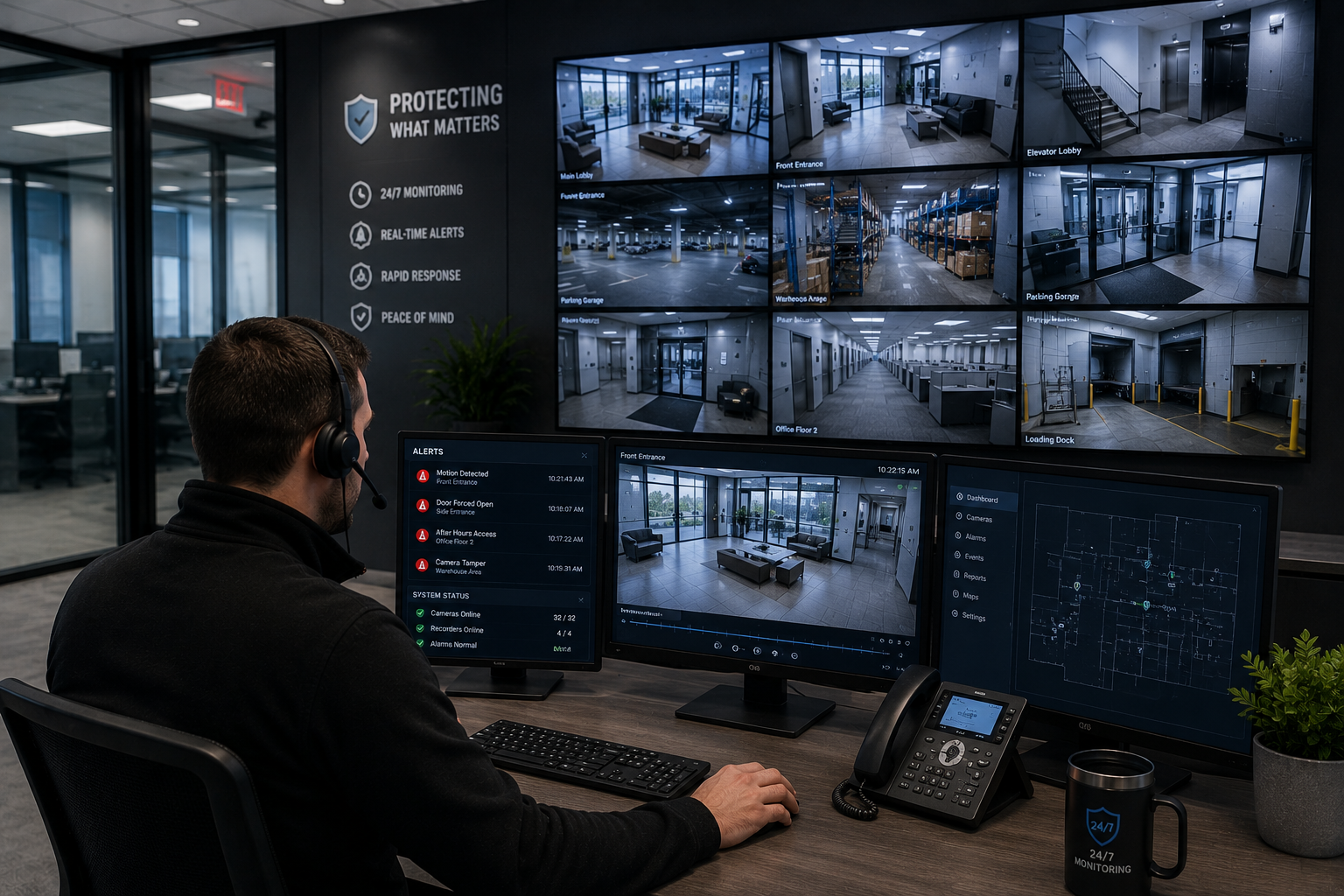
- Inventory after-hours lighting at every camera location — many commercial sites run loading docks, parking aprons, and back-of-house corridors below the camera’s rated minimum lux.
- Confirm IR illuminator range matches the actual zone — IR rated to 30 m does not produce identification-grade imagery at 30 m, only detection.
- Identify backlight conditions at glass entries, dock doors, and skylights where bright background renders the foreground unusable.
- Confirm white-balance and exposure are tuned for the environment, not the factory default — most are not.
A defensible posture treats lighting as part of the surveillance system, not a building service the camera happens to coexist with.
4. Storage Sizing, Retention & Defensible Windows
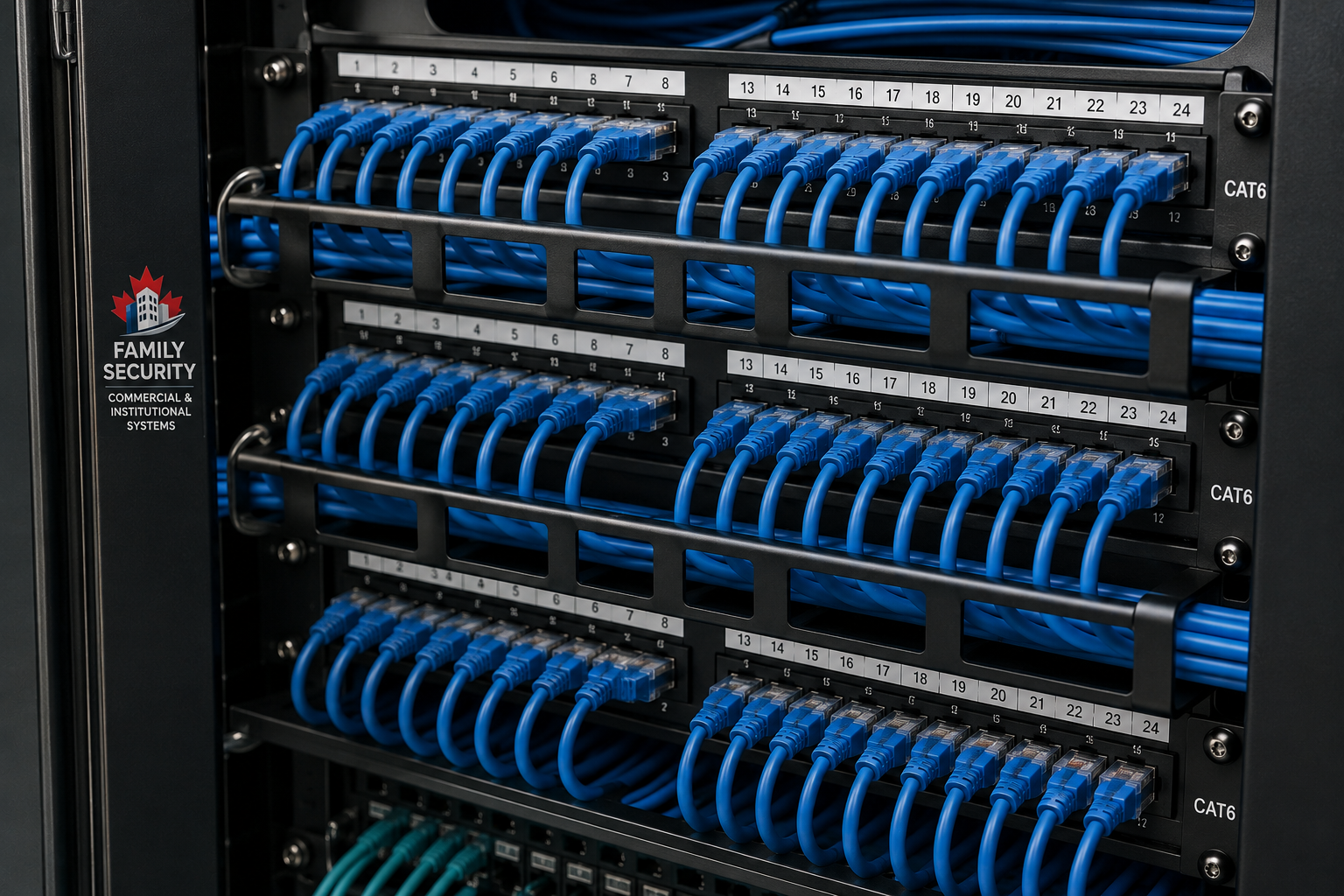
- Confirm actual retention window in days, not the recorder spec — the system may advertise 30 days but be silently overwriting at 11 because resolution or fps was raised post-install.
- Match retention to the defensible window the business needs: loss-prevention discovery lag, insurance carrier requirement, regulatory minimum, multi-tenant lease language.
- Verify storage health, RAID status, and SMART data on every recorder — silent drive failure is the most common cause of retention shortfall.
- Test export workflow — speed, format, chain-of-custody metadata, and the ability to produce footage for police or insurers without a vendor truck roll.
Retention shortfalls are typically discovered the week an incident is investigated — by then the footage is gone. The assessment surfaces them before the incident.
5. NDAA Section 889 & Equipment Lineage
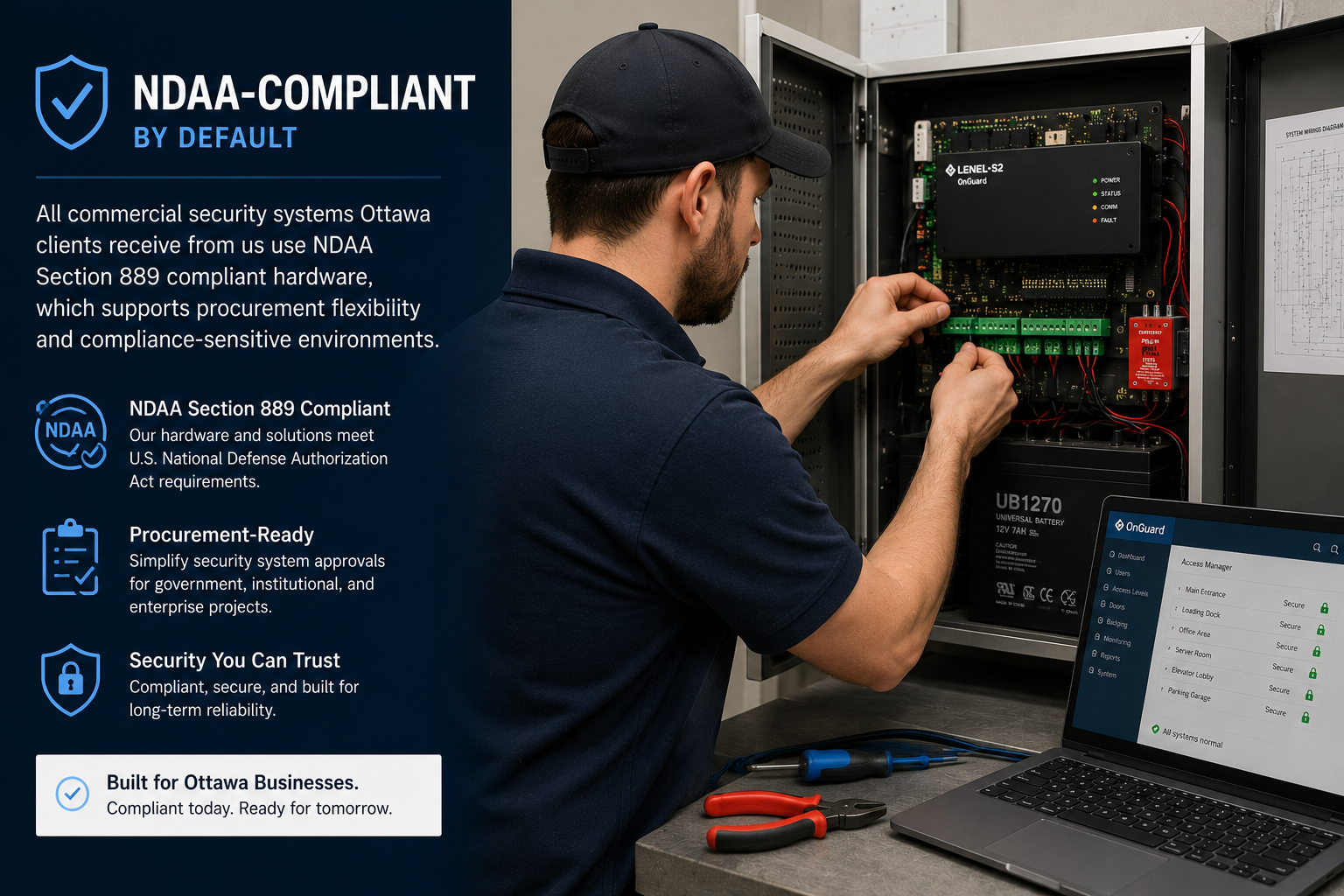
- Inventory every camera, encoder, recorder, and switch against the CISA Section 889 prohibition list on covered equipment — Hikvision, Dahua, Hytera, Huawei, ZTE and their OEM/rebrand lineage.
- Verify equipment lineage at the chipset and firmware level — rebranded gear often shares the same prohibited internals as the original manufacturer.
- Flag federal-adjacent tenants, government-contracted floors, and any building leasing to a Crown corporation as elevated NDAA scrutiny.
- Confirm procurement specifications explicitly require NDAA-compliant equipment across all video, access, and network paths, with a phased migration plan where non-compliant gear is present.
NDAA exposure is often discovered by an insurance underwriter or a federal lease-renewal counter-party, not on-site — either way it lands on the operator.
6. Recorder Hardening, Network Segmentation & Cyber Posture
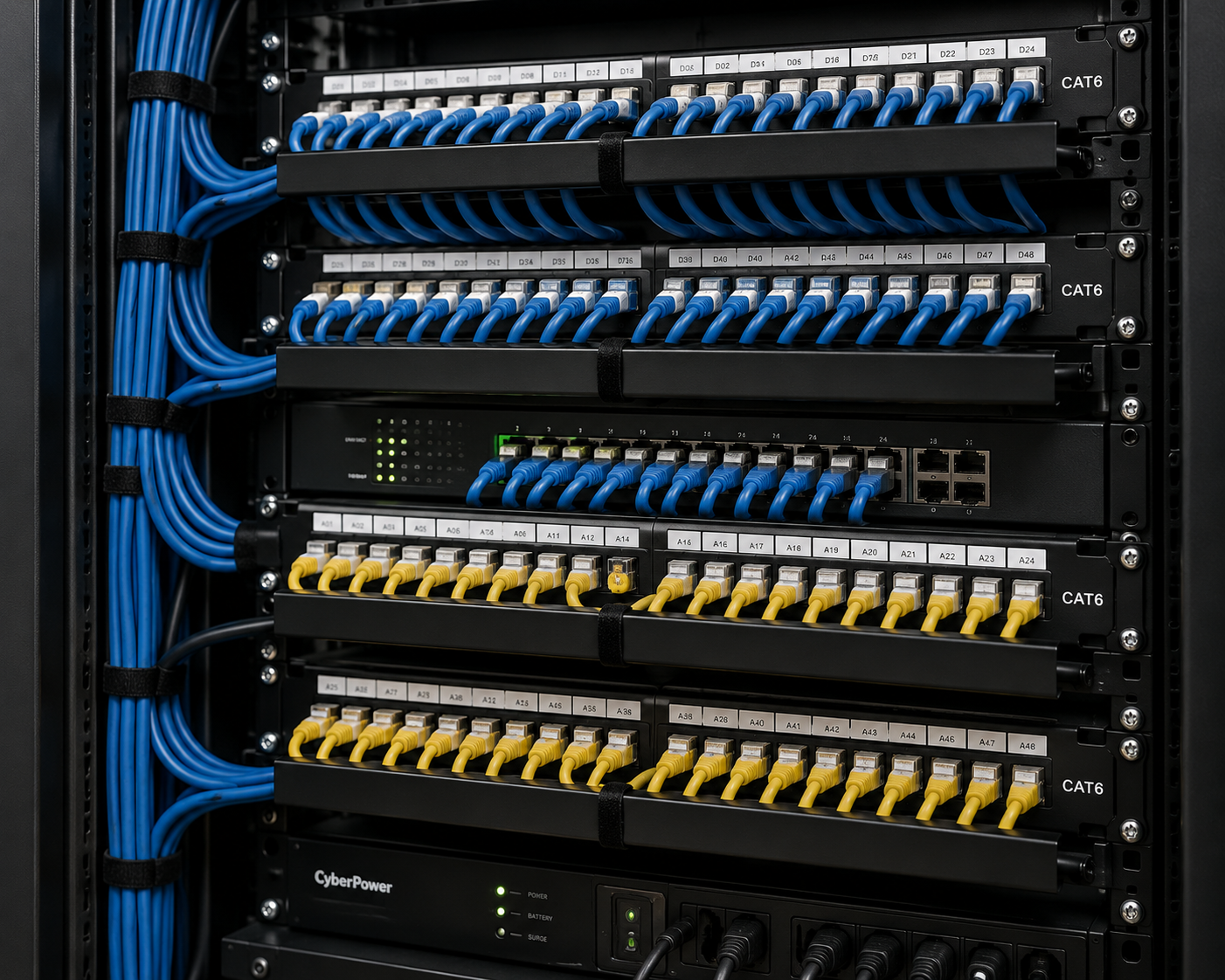
- Confirm default admin credentials have been changed on every recorder, camera, and NVR — default credential exposure is still the most common finding on inherited estates.
- Verify firmware is current and on a documented patch cadence — out-of-support firmware is a posture failure, not a deferral.
- Confirm cameras and recorders are isolated on a dedicated VLAN with no flat-network exposure to office, guest, BMS, or tenant traffic.
- Audit accounts and role separation between viewer, operator, and administrator; disable ONVIF, UPnP, and remote services not in active use.
A CCTV system on the same VLAN as the office printer is the posture an attacker assumes by default — and very often finds.
7. Remote Viewing, Permissions & Audit Trails
- Inventory every account with remote-viewing access — mobile, web client, VMS workstation — and reconcile against a current personnel list; orphaned accounts are routine findings.
- Confirm multi-factor authentication is enforced on every external-facing surface; password-only remote access is no longer defensible.
- Verify the audit trail captures login, view, export, and configuration-change events with sufficient retention to support an investigation.
- Integrate the video posture with access control event logs where the building has both — door-event to video-event correlation is the highest-value investigative surface.
Remote-viewing exposure is granted incrementally over years and rarely reviewed; the assessment is the review.
8. PTZ, Analytics & Special-Purpose Cameras
- Confirm PTZ tour, presets, and home position are aligned with risk — a PTZ pointed at an empty corner during the incident window does not count as coverage.
- Validate that deployed analytics (line-cross, loitering, object-left, license-plate, people-count) are tuned, generate actionable events, and are not silently disabled.
- Inventory specialty cameras (thermal, multi-sensor, fisheye, license-plate dedicated) and confirm each is doing the job it was deployed for.
- Verify analytics events are routed to a human or a workflow — an analytic firing into a void is a record of activity, not a security control.
Specialty cameras are routinely deployed for a one-time purpose and quietly outlive it; reconciliation against current need is part of the assessment.
Common Findings in Ottawa Commercial CCTV Reviews
The patterns below recur across Ottawa commercial CCTV reviews regardless of building type, vendor lineage, or system age. They are the conditions an assessment is structured to surface.
- Camera counts that match the as-built but cover a layout the tenant has since reconfigured.
- Identification-grade design intent on paper, detection-grade pixel-on-target in reality.
- Retention quietly shorter than spec because resolution, frame rate, or recorder count changed post-install.
- Default admin credentials on at least one recorder, camera, or NVR — almost always inherited.
- NDAA-prohibited or rebranded equipment lingering on federal-adjacent floors or in mixed-vendor estates.
- Cameras and recorders on the same VLAN as office or tenant traffic — flat-network exposure.
- Orphaned remote-viewing accounts belonging to departed staff or former vendors.
- Analytics installed at commissioning, never tuned, now generating zero actionable events.
- No documented export workflow — every police or insurer request becomes an ad-hoc vendor call.
Together these conditions describe the drift state of a typical inherited commercial CCTV estate in Ottawa and Eastern Ontario. A single default credential is a fix; default credentials plus flat network plus orphaned accounts is a posture — and posture is what the assessment characterizes.
When to Schedule a Commercial CCTV Assessment
The most common trigger is a procurement decision — the operator knows a CCTV upgrade is coming and needs a defensible scope before the RFP goes out. Other triggers are equally valid.
- A scoped CCTV upgrade or expansion is being budgeted — the assessment defines the baseline the upgrade is measured against.
- An incident occurred and the footage did not hold up — the assessment is a post-incident root-cause review.
- An insurance carrier has flagged surveillance as a condition of policy renewal or premium adjustment.
- A federal-adjacent tenant is being onboarded, or a lease renewal raises Section 889 compliance scrutiny.
- A new IT-security team or facilities lead is taking over an inherited estate and needs a defensible inventory.
- Site reconfiguration — tenant build-out, dock expansion, new floor plate — is rendering the existing coverage map obsolete.
- A security system maintenance contract is up for renewal and the operator wants an independent baseline before re-signing.
The output is documented findings against a defensible baseline, prioritized remediation, and a scoped upgrade path with procurement language drafted. A warehouse security assessment or office security assessment often runs alongside the CCTV scope, and a property management security review is the parallel scope when common-area video is shared across tenants.
Next Step
Family Security is a commercial security integrator working across Ottawa and Eastern Ontario, with operating experience across industrial, multi-tenant, retail, and federal-adjacent CCTV estates. We assess systems we did not install, and scope the upgrades against the findings — not against a hardware catalogue.
A SiteScope CCTV assessment ends with a structured Technician Review Note, not a quote. The note documents coverage, image quality, retention, NDAA lineage, and cyber-posture findings, ranks them by operational consequence, and translates them into procurement-ready language.