Retail Security Assessment Checklist for Ottawa Businesses
This retail security assessment checklist gives store owners, multi-site retail operators, and loss-prevention leads a practical way to review how a store is actually protected — across storefront and perimeter, sales-floor surveillance, point of sale and cash office, stockroom, access control, alarms, and day-to-day operations. It is written for retail businesses in Ottawa and across Eastern Ontario, where shrinkage, after-hours break-ins, and organized retail crime create exposure that rarely shows up until a count comes up short. Use it as a self-audit before you bring in an integrator, or as a structured way to scope a formal review.
Family Security is a commercial and institutional security integrator serving Ottawa and Eastern Ontario, with field experience across retail stores, plazas, and multi-tenant commercial properties. The checklist below reflects the categories our technicians work through during an on-site retail security review — and the common findings we see in real stores.
Why a Retail Security Assessment Checklist Matters
Retail carries a different risk profile than an office or a warehouse. The space is open to the public by design, staff turnover is high, cash and high-value merchandise sit close to the door, and most loss is quiet and cumulative rather than a single dramatic event. A structured assessment turns “the cameras look fine” into a documented picture of what is covered, what is not, and what to prioritize.
- The sales floor is intentionally open, so prevention depends on coverage and process, not a hardened perimeter.
- High staff turnover keeps access credentials and cash-handling discipline in constant churn.
- Shrinkage from shoplifting, internal theft, and process error often goes undetected until inventory reconciliation.
- Cash office, stockroom, and receiving are the highest-value, least-watched zones in most stores.
- Insurers and franchisors increasingly ask for documented security and loss-prevention measures.
Working through the checklist end to end also gives you a defensible record for insurance, franchise compliance, and internal planning.
How We Assess a Retail Security Posture
The review follows eight areas, in order — from the public-facing storefront inward to back-of-house, cash, and systems. The order matters: storefront and sales-floor coverage shape what the cash office and stockroom controls need to do.
1. Storefront, Entrances & Perimeter
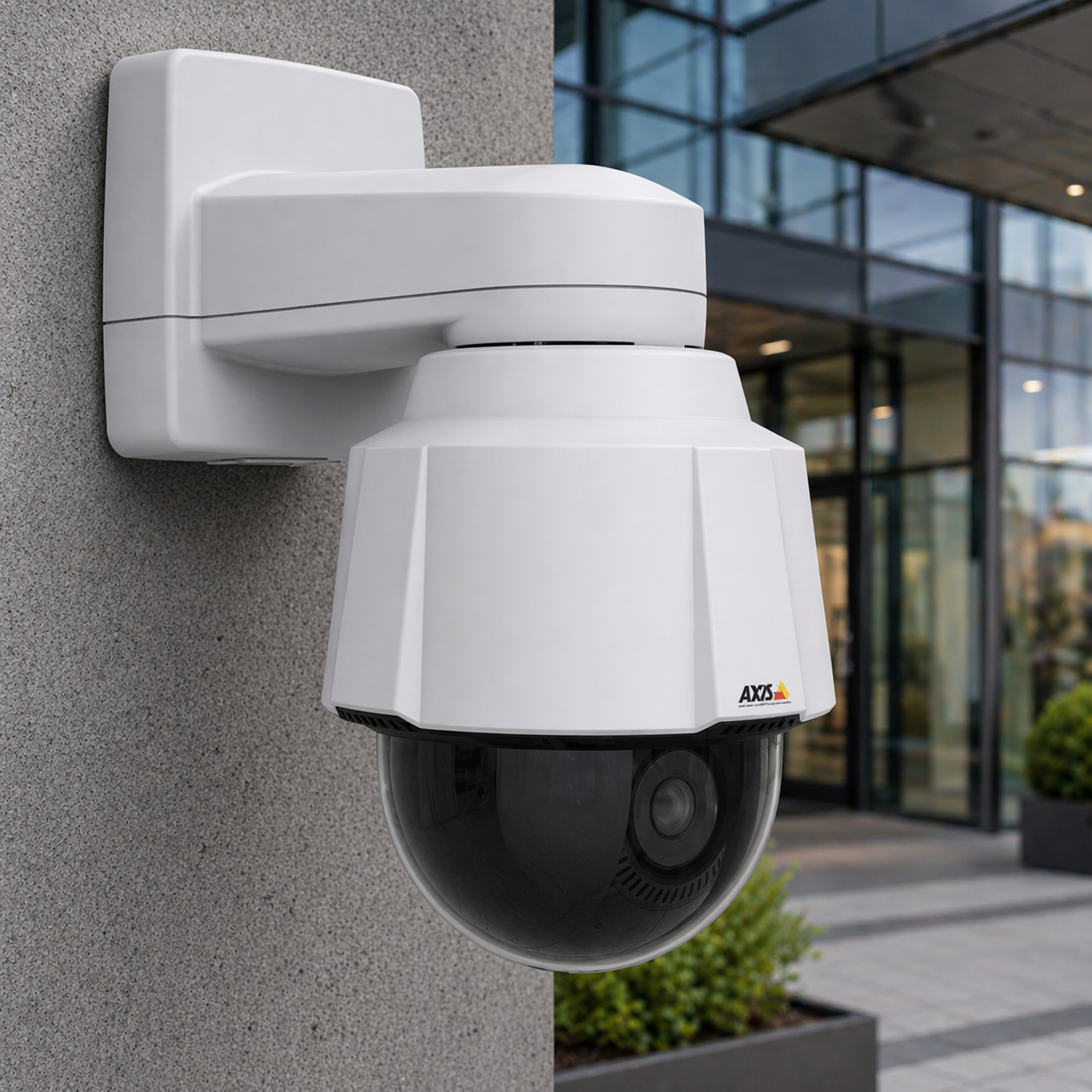
- Identification-grade camera coverage of every public entrance and exit, capturing a usable face shot at the door — not a ceiling-down overview.
- Display windows, after-hours grilles, and glass entrances assessed for forced-entry and smash-and-grab exposure.
- Exterior lighting covering entrances, the parking frontage, and any rear or side service doors.
- Customer entrance flow that funnels past staffed or monitored points, with no unmonitored secondary exits.
- Signage indicating monitored premises posted at entrances.
Common vulnerability: a rear or side fire-exit door propped open for deliveries or breaks becomes an unmonitored entry and a favoured exit for walk-out theft. In multi-tenant plazas, shared rear corridors are a frequent blind spot.
2. Sales Floor Surveillance & Camera Coverage
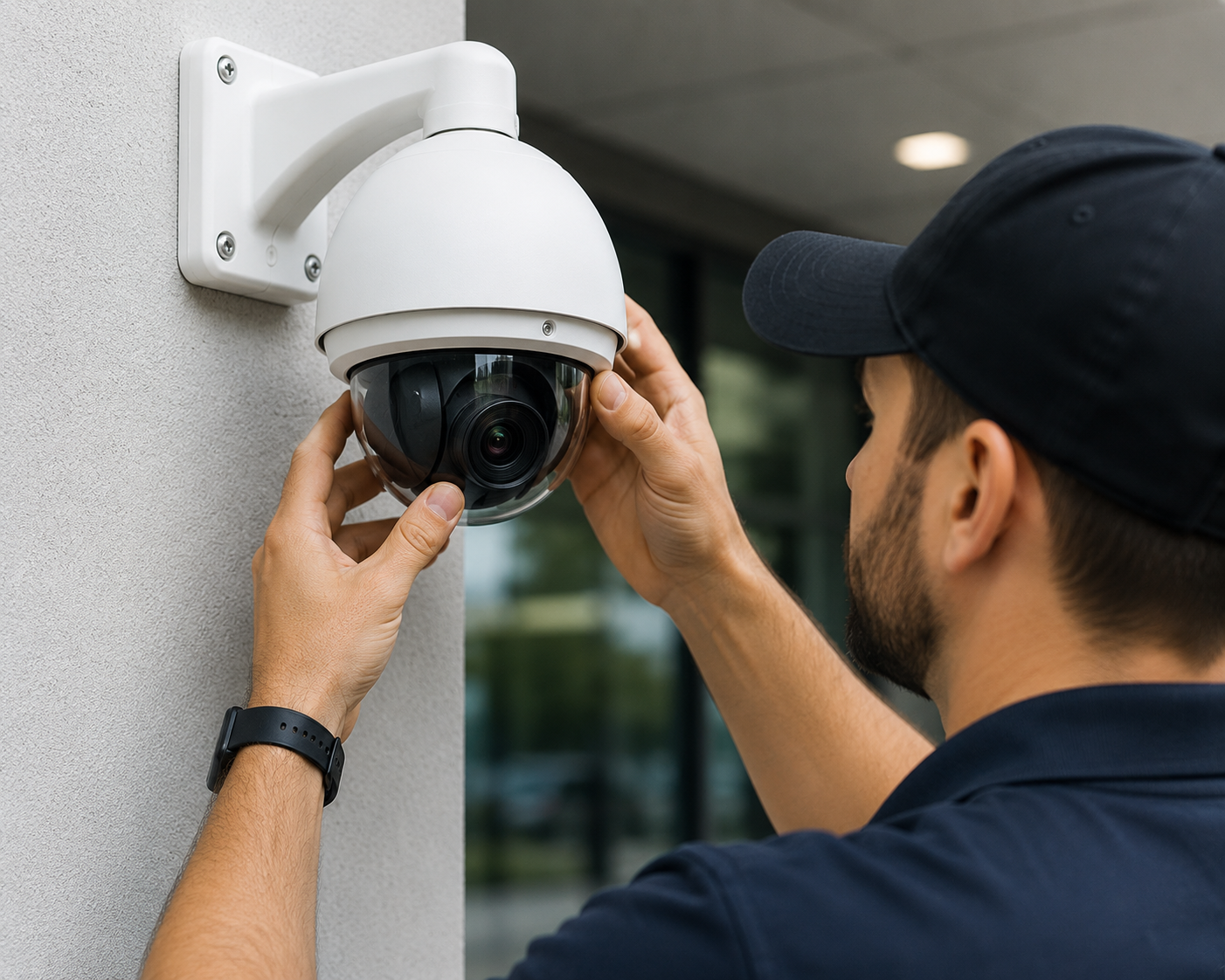
Cameras only help if they cover the zones where loss actually happens and produce usable images. A well-designed retail security camera system follows merchandise and customer flow.
- Coverage of high-value displays, end caps, blind aisles, and fitting-room entrances (entrances only — not interiors).
- Checkout and returns-desk coverage with an identification-grade angle on hands, tender, and merchandise.
- Recorder health verified — every camera streaming and writing, with retention that meets your defensible window.
- Camera positions re-checked after any floor reset, fixture change, or seasonal layout change.
- Coverage-planning, resolution, and retention reviewed together — detailed further in our commercial CCTV assessment guide.
Common vulnerability: blind aisles created by tall seasonal fixtures installed after the camera plan was set. The other recurring finding is a recorder quietly out of retention, overwriting footage faster than policy assumes — discovered only when an incident clip is already gone.
3. Point of Sale, Cash Office & Cash Handling
- Cash office on dedicated access control with camera coverage of the safe, counting area, and door.
- Drop-safe procedure, till-limit policy, and deposit routine documented and actually followed.
- POS transactions reconcilable against camera footage for refund, void, and no-sale review.
- Refund, override, and discount authority restricted and logged.
- Key and safe-combination control with a record of who holds what, reviewed on staff change.
Common vulnerability: a cash office that any staff member can enter and a safe combination that has not changed since the last two managers left. Refund and void abuse is the most common internal-loss pattern that camera-to-POS reconciliation catches.
4. Stockroom, Receiving & Inventory Control
- Receiving door secured and monitored, with deliveries handled through a controlled, logged process.
- Stockroom access limited to authorized staff, with camera coverage of the receiving and high-value storage areas.
- High-value or high-theft merchandise held in a secured cage or locked area with restricted access.
- Separation of duties between receiving, stock counts, and inventory adjustments.
- Trash and recycling removal routed so it cannot be used to conceal merchandise leaving the building.
Common vulnerability: a receiving door left unlocked through the delivery window with no camera on it — the single easiest path for both external and internal stock loss. Compactor and trash runs to an uncovered rear area are a close second.
5. Access Control & Back-of-House Doors
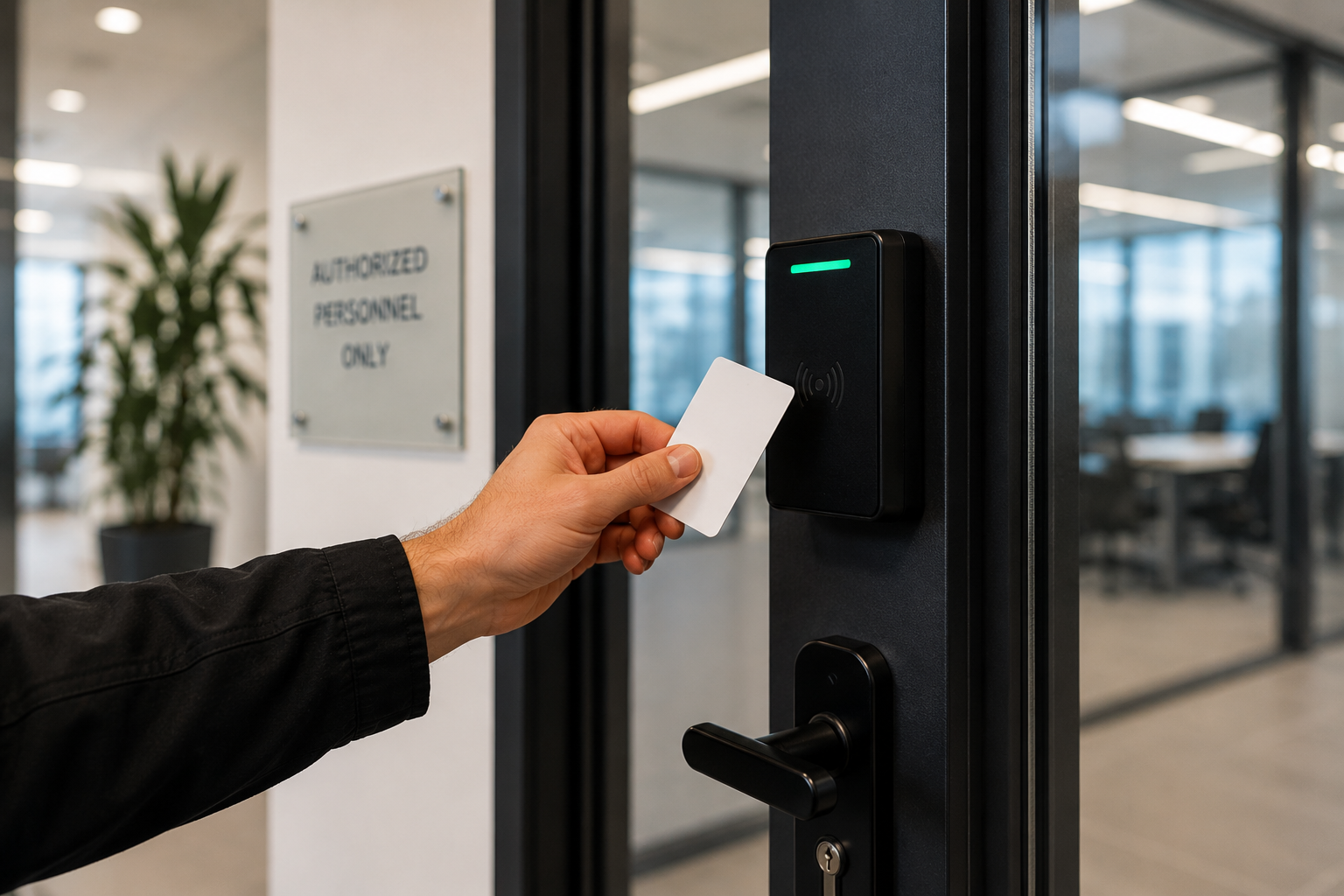
Keys do not scale in retail. Credential-based access control tells you who entered the stockroom, cash office, or after-hours door, and lets you revoke access the moment someone leaves.
- Back-of-house, stockroom, cash office, and office doors on credential-based access control, not shared keys or codes.
- Cardholder list current — former staff and seasonal hires removed promptly on departure.
- Access levels scoped by role, so sales staff cannot reach the cash office or high-value cage.
- Door hardware healthy: closers, strikes, request-to-exit devices, and door-held-open alerts on back-of-house doors.
- For stores upgrading legacy locks or keypads, an access control upgrade assessment scopes the migration.
Common vulnerability: high seasonal turnover leaves the cardholder list full of credentials for people who no longer work in the store. A stockroom protected only by a key everyone borrows is the second-most-common finding.
6. Intrusion Alarm & After-Hours Protection
- Door, motion, and glass-break protection on entrances, display windows, and rear service doors.
- Arming schedule aligned with real operating hours, including late retail and seasonal extensions.
- Monitored communication path with supervised connectivity and cellular failover.
- Current key-holder and response-call list on file with the monitoring station.
- Alarm history reviewed — chronic false alarms and bypassed zones investigated, not left disarmed.
Common vulnerability: a display-window or rear-door zone that false-alarms gets bypassed “temporarily,” leaving the highest-risk opening unprotected while the contract still bills for monitoring it. A modern commercial alarm system with proper zoning removes the temptation to bypass.
7. Loss Prevention & Internal-Theft Controls
- Documented onboarding and offboarding that issues and revokes access and keys promptly.
- No credential sharing, door-propping, or unmonitored back-door use tolerated as normal practice.
- Electronic article surveillance (EAS) and tagging used consistently on high-theft merchandise.
- Fitting-room control, bag-check policy, and refund verification applied evenly and professionally.
- Clear ownership of the security system — someone accountable for camera review, user changes, and incident follow-up.
Common vulnerability: offboarding lags — a departed employee’s credential and keys still work the following week. Internal theft and refund abuse account for a large share of retail shrink, and both are process problems before they are technology problems.
8. Cybersecurity, NDAA & Maintenance Lifecycle
- POS and payment isolation: cameras, recorders, and controllers on a network segment separated from the point-of-sale and payment environment, so a breach of one cannot reach cardholder systems.
- Recorder and VMS access controlled by named, role-based accounts with clip-export limited to authorized staff — not a shared admin login at the back counter.
- Default passwords changed on every camera, recorder, and controller, with firmware kept within the manufacturer-supported window.
- Vendor and integrator remote access to the recorder or head-end secured with strong credentials and MFA, enabled only when needed and logged.
- Equipment provenance reviewed against NDAA Section 889 requirements where a retailer serves government or federal-adjacent contracts.
- Scheduled security system maintenance and end-of-life planning so coverage does not degrade quietly between resets.
Common vulnerability: a recorder reachable from the internet on its default login, sharing a flat network with the POS — a single weak point that exposes both footage and the payment environment. Multi-location retailers compound the exposure by reusing one remote-access credential across every store.
High-Risk Retail Formats
Some retail formats carry concentrated risk that a general checklist understates. These three come up most often across Ottawa and Eastern Ontario, and each shifts where the assessment spends its time:
- Convenience stores — frequently single-staff and open late, which makes robbery and till exposure the primary concern. We look for a time-delay drop safe, a trained low-till cash-handling routine, a panic/hold-up alarm reachable from the counter but not visible to customers, and identification-grade coverage of the counter, entrance, and forecourt.
- Liquor stores — high-value, easily resold inventory and a recognized robbery target. The review weights after-hours hardening such as grilles and reinforced glass, a secured stockroom, entrance and aisle coverage on high-value spirits, and a controlled receiving process.
- Pharmacies — controlled-substance storage adds regulatory weight on top of theft risk. We confirm narcotics and dispensary areas sit on dedicated access control separate from general staff access, that every entry is logged and retained for a defensible window, and that camera coverage and alarm zoning treat the dispensary as a distinct high-security zone.
The underlying systems are the same across formats; what changes is which zone is the priority and how tightly access is logged.
Common Findings in Ottawa Retail Security Reviews
Across the stores and plaza tenants we assess in Ottawa and Eastern Ontario, the same categories of finding recur:
- Checkout and returns cameras covering the area but not capturing a usable image of hands and tender.
- Blind aisles created by seasonal fixtures installed after the camera plan was set.
- Cash office accessible to staff who have no cash-handling role, with an unchanged safe combination.
- Receiving doors unlocked and uncovered through the delivery window.
- Stale access credentials and keys from seasonal and departed staff still active.
- Display-window or rear-door alarm zones bypassed and never restored.
- Recorders out of retention, overwriting footage faster than policy assumes.
- Camera and recorder firmware years out of date, sharing a flat network with the POS.
None of these are exotic. They are the consequences of systems that were correctly designed at install and then drifted from how the store actually operates as layouts, staff, and seasons changed.
When to Schedule a Retail Security Assessment
A retail security review is most useful when scheduled against a specific trigger:
- A new store opening, relocation, or major floor reset.
- A rise in shrinkage flagged at inventory reconciliation.
- A break-in, walk-out theft pattern, or organized-retail-crime incident.
- An insurance or franchisor requirement at renewal.
- Procurement preparation for a camera, alarm, or access control upgrade.
- Annual operational review, especially for systems older than five years.
- Cross-discipline scoping when a warehouse security assessment, commercial CCTV assessment, or security maintenance audit points to a store-level posture that needs its own review.
The output is a documented set of findings, prioritized remediation, and a scoped upgrade path. Industry data from Statistics Canada on commercial and property crime shows that theft and break-and-enter remain a persistent share of commercial incidents — which is exactly why the assessment starts at the storefront and works inward.
Next Step
Family Security is a commercial security integrator serving retailers, plaza tenants, and multi-site operators across Ottawa and Eastern Ontario. We design, install, and maintain access control, video surveillance, intrusion alarms, and integrated commercial security systems — and we assess stores we did not install, delivering a documented picture of the current posture, not a sales quote for equipment you may not need.
If you operate or manage a retail business in Ottawa or Eastern Ontario and want a structured review of your current security posture, request a commercial security assessment.